
Restorative dentistry
Treating decay and restoring teeth with fillings.
Some of the visualisations on this page were created with AI.

About the field
Restorative dentistry makes sure that a tooth stays a tooth: it removes decay and replaces the lost tissue with a filling. It also deals with changes in shape and colour and with broken-off parts.
Timing is decisive. A small cavity means a small filling and one visit. The same decay two years later may mean root canal treatment and a crown.
A properly placed filling not only restores the tooth but also prevents further problems — leaking margins are the most common place where new decay develops.
We use composite materials that match the colour of the tooth and are held in place by bonding — so there is no need to grind away healthy tissue just to shape the filling.
The solutions we choose from
The procedure differs according to what the tooth needs: removing decay, repairing a fracture or improving its appearance.
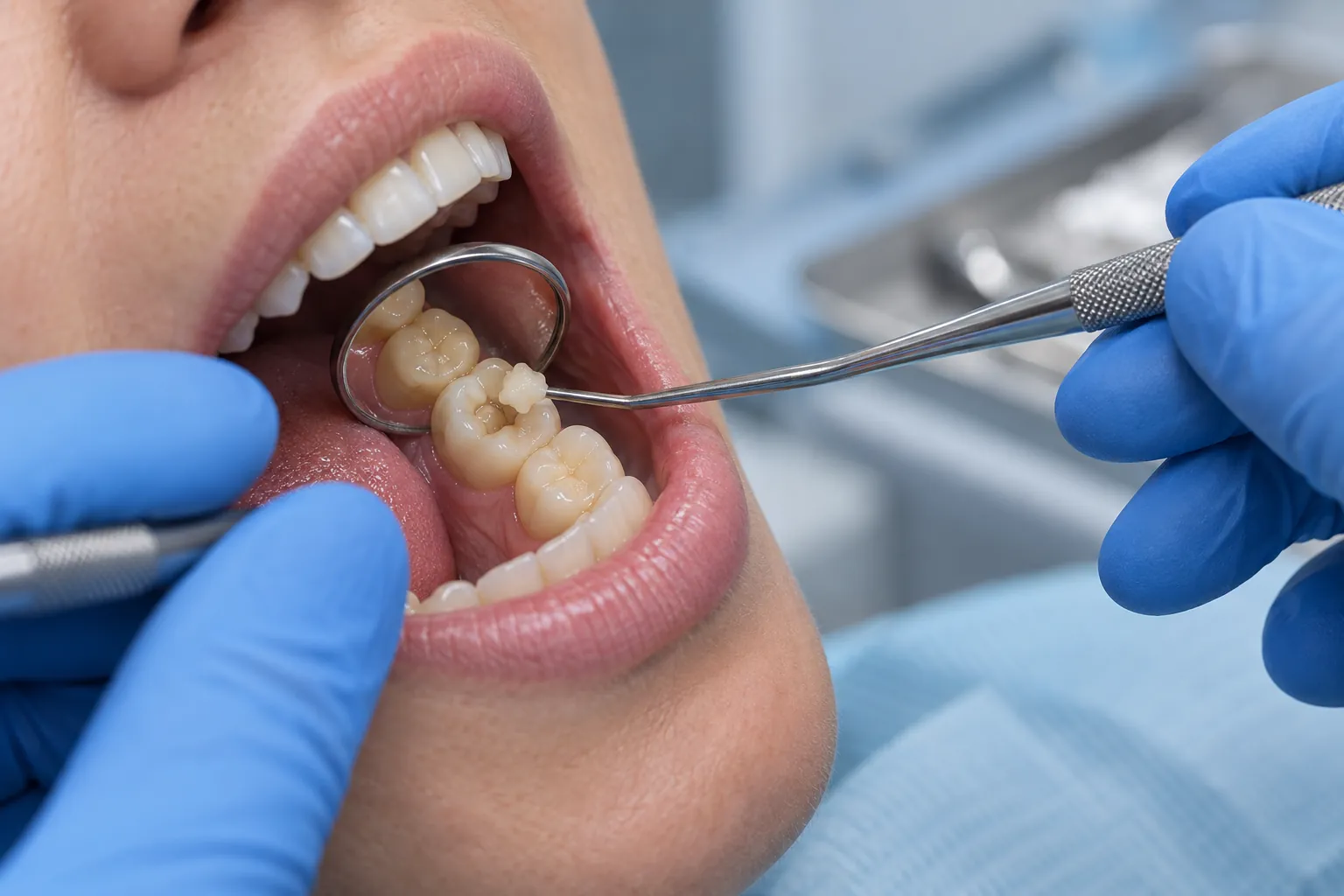
Treating decay
Tooth decay is the most common disease of the mouth. It develops in the grooves of the chewing surfaces, between the teeth and at the gum line. Left untreated, it can destroy the whole tooth.
Fractures and changes in shape
A chipped corner, wear or a wedge-shaped defect at the neck of the tooth. Composite can restore the tooth’s original shape without significant loss of tissue.
Teeth whitening
A change in the shade of your natural enamel. More in cosmetic dentistry.
What treatment offers
Tooth structure restored
A filling restores the shape and strength of a tooth after decay, a fracture or wear — and prevents the need for a more extensive procedure later.
An end to the pain
Sensitivity to sweet, hot and cold things is most often caused by decay. It subsides after treatment.
Destruction stopped
Treated decay does not spread any further. Untreated decay reaches the pulp, and a simple filling turns into root canal treatment.
Natural appearance
Composite matches the colour of the tooth. On a filling in the front teeth, you will hardly notice it.
Healthy tissue preserved
Bonded fillings do not require grinding away healthy enamel just for the shape. Only the affected tissue is removed.
Preventing complications
Timely treatment prevents infection, gum disease and tooth loss — in other words, the most expensive outcome.
How we work
Findings
We look for decay both visually and on an X-ray — between the teeth and under fillings, we cannot see it otherwise.
Removing decay
Under local anaesthetic, we remove the affected tissue and leave the healthy tissue in place.
Filling
The tooth receives a composite filling, which we shape to your bite and polish so that plaque does not stick to it.
What we treat in this field
Tooth decay
At an early or advanced stage. At the very earliest stage — a white spot without a cavity — it can be stopped without drilling.
Old fillings
A filling that has fallen out or is leaking. A leak lets bacteria under the filling, where the decay continues unseen.
Chipped tooth
A corner or edge broken off after an injury or biting on something hard.
Sensitivity and wear
Sensitivity to sweet, hot and cold things, tooth wear and wedge-shaped defects at the necks of the teeth.
Treatments in this field
An overview of what we do in this field. Prices are listed in our price list.
Clinical cases
See cases of patients from our Prague centre, with before and after comparisons.
Who works in this field




Agreements and partnerships
Contracted health insurance companies and programme partners.
Contracted health insurance companies
- Všeobecná zdravotní pojišťovna (General Health Insurance Company) — VZP (111)
- Vojenská zdravotní pojišťovna (Military Health Insurance Company) — VoZP (201)
- Česká průmyslová zdravotní pojišťovna (Czech Industrial Health Insurance Company) — ČPZP (205)
- Oborová zdravotní pojišťovna (Industry Health Insurance Company) — OZP (207)
- Zaměstnanecká pojišťovna Škoda (Škoda Employee Insurance Company) — ZPŠ (209)
- Zdravotní pojišťovna ministerstva vnitra (Health Insurance Company of the Ministry of the Interior) — ZP MV ČR (211)
Programme partners
Sodexo
Sodexo provides services based on a combination of different capabilities and skills. It can currently be used only for dental hygiene and fillings.
Benefit Plus
External administration of employee benefits. It can currently be used only for dental hygiene and fillings.
Frequently asked questions
How do I know if I have tooth decay?
Often you don’t — early decay does not hurt. That is why check-ups are twice a year.
Does every cavity have to be drilled?
No. The earliest stage — a white spot without a cavity — can be stopped with fluoride treatment and better oral hygiene.
Does a white filling last as long as amalgam?
Yes, if it is placed correctly. What matters more than the material itself is keeping the working area dry and the bonding technique.
Does treatment hurt?
We treat under local anaesthetic, so not during the procedure. Short-term sensitivity after treatment is common and wears off.
How long does a filling last?
Years, and well-made fillings can last more than ten years. Bruxism, neglected oral hygiene and smoking shorten their lifespan.
When is a filling no longer enough?
When too little of the tooth’s own tissue remains. Then it is time for a crown, or first root canal treatment.
Book an appointment
Fill in the form and we will get back to you to find a suitable appointment together.