Endodontics
Root canal treatment that saves the tooth.
Some of the visualisations on this page were created with AI.
About the field
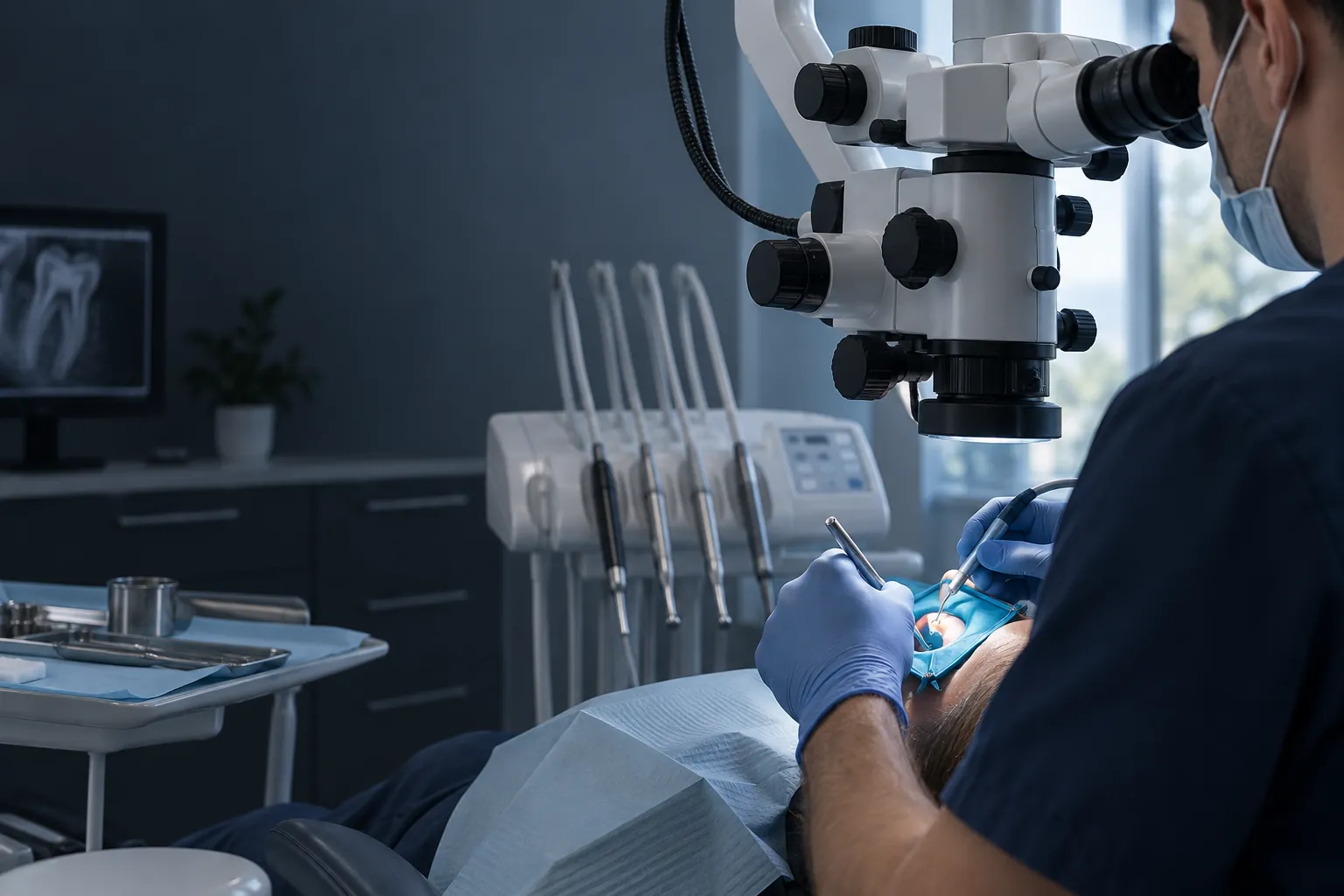
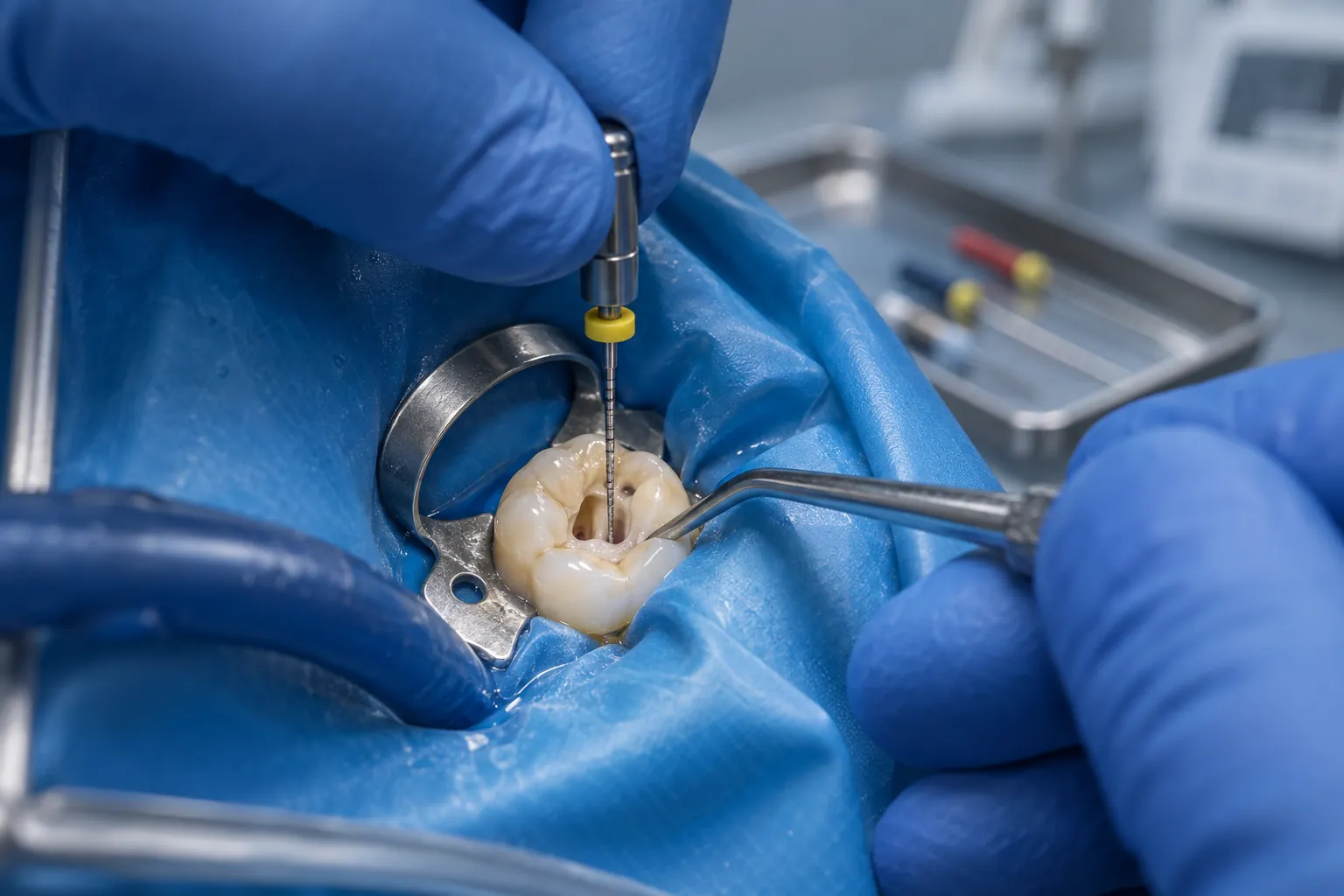
Endodontics deals with the inside of the tooth — the dental pulp and the root canals. When the pulp becomes inflamed or dies, root canal treatment is the only way to keep the tooth.
The procedure involves removing the inflamed tissue, cleaning and disinfecting the canals and filling them. The tooth stops hurting and the infection loses its source.
Damage to the pulp is caused by deep decay, an injury or a fracture. It shows up as pain, sensitivity to heat and cold, discomfort when biting, and sometimes an abscess or a fistula.
A treated tooth is more brittle than before and usually needs to be protected with a crown. Without one, there is a risk that it will crack.
The solutions we choose from
The procedure differs depending on whether it is the first treatment or a correction of an earlier one.
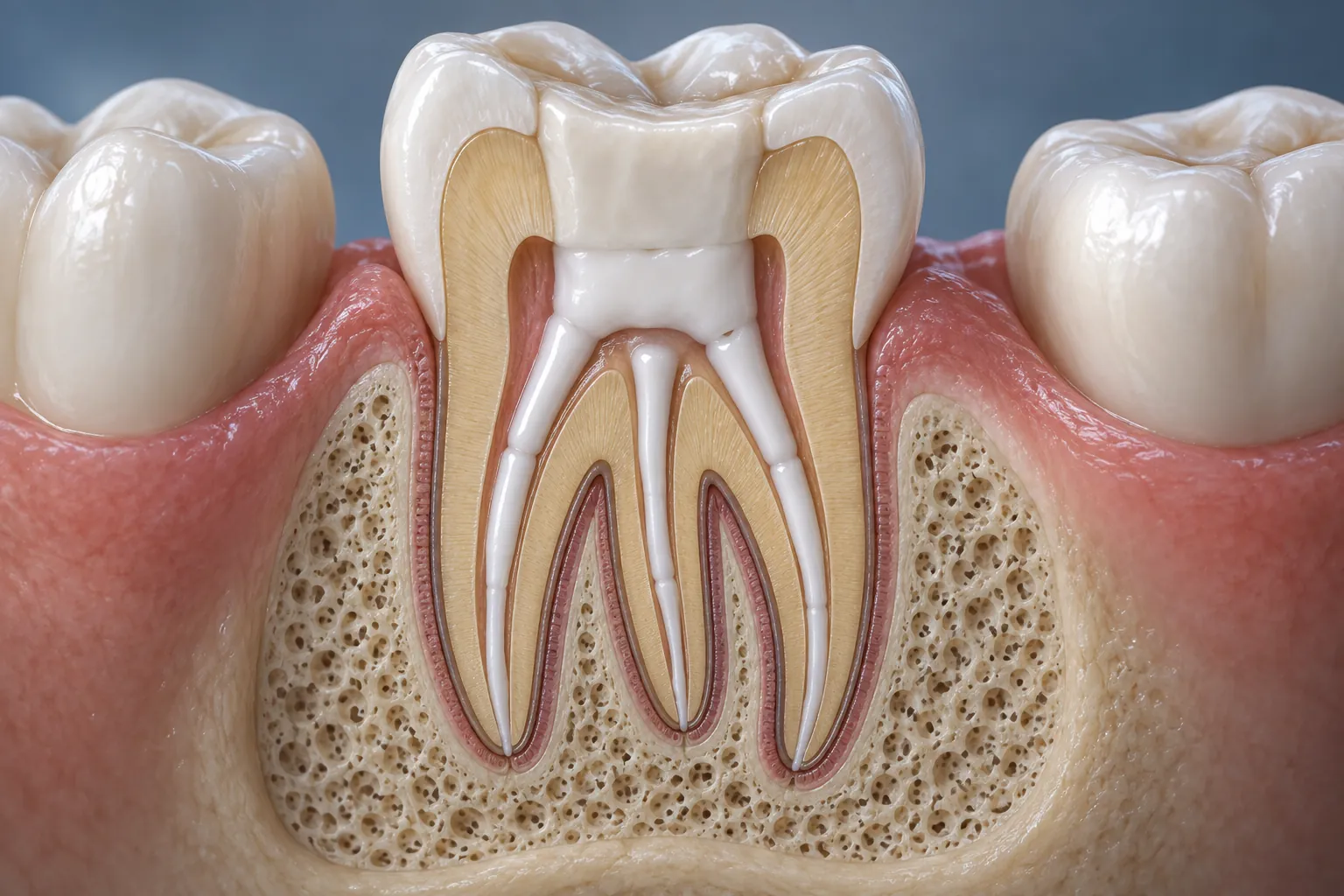
Root canal treatment
Under local anaesthetic, we open the tooth, remove the inflamed pulp, and clean and fill the canals. In more complex cases this cannot be done in a single visit — in the meantime, the tooth is protected by a temporary filling.
Root canal retreatment
When an earlier treatment has not worked, we reopen the canals, remove the old filling, disinfect them again and refill them. This is where the operating microscope pays off most.
What treatment offers
An end to the pain
Inflammation of the pulp causes some of the most severe pain in the mouth. Removing the damaged tissue ends the pain, and recovery is usually quick.
Stopping the infection
Cleaned and filled canals cut the infection off from its source and prevent it from spreading into the bone and gums.
Keeping your own tooth
Endodontics saves teeth that would otherwise end up being extracted. Your own tooth is always better than any replacement.
A complete set of teeth
A preserved tooth means no gap forms: the neighbouring teeth do not tilt and the opposing tooth does not over-erupt.
Function preserved
Once it has been built up and protected with a crown, the tooth serves for chewing just as before.
Less expensive than a replacement
Keeping a tooth is usually simpler and less expensive than replacing it with an implant and a crown.
The technology we rely on
Endodontics is work on the scale of tenths of a millimetre. Without magnification, some of the canals are simply missed.
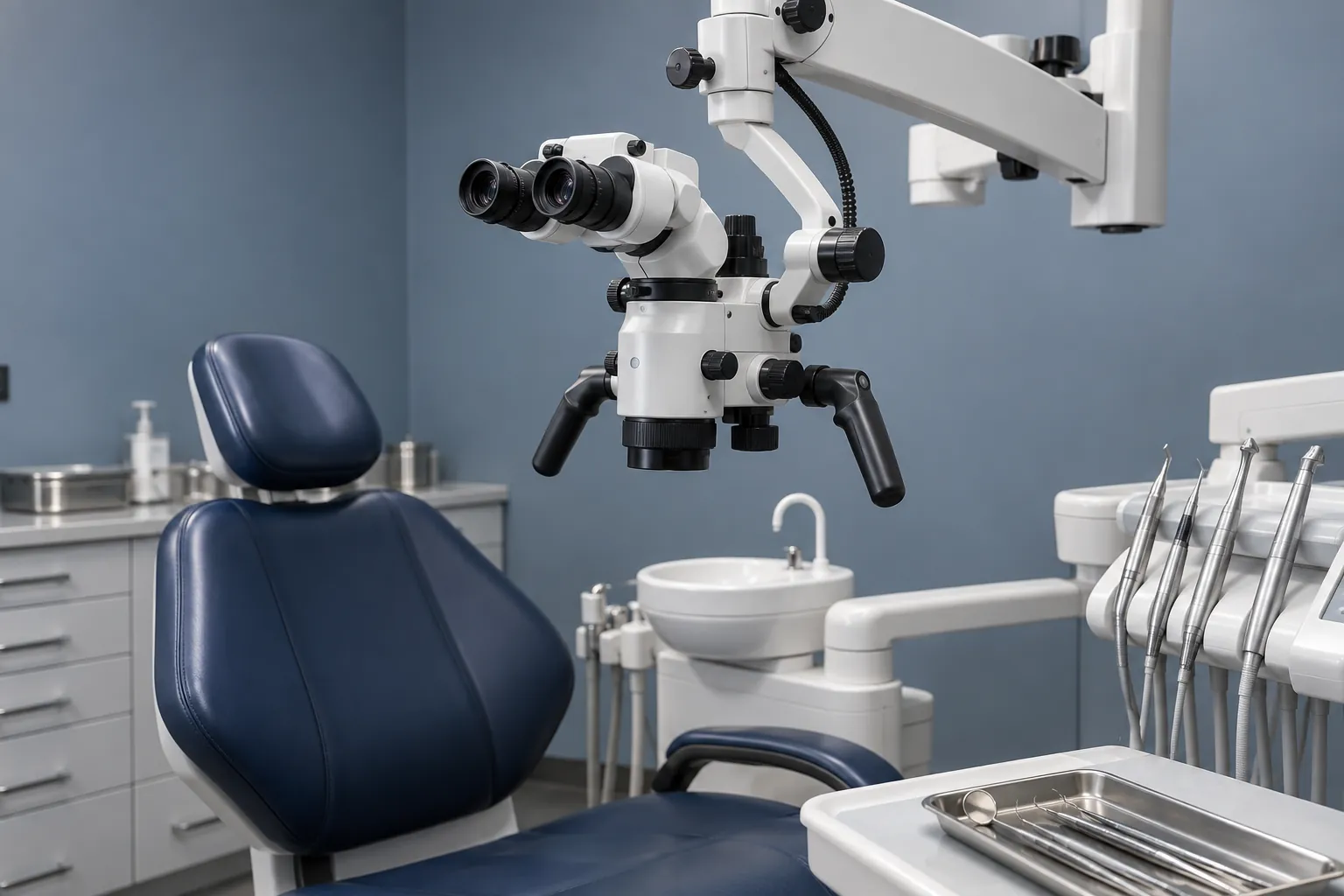
Operating microscope
It makes it possible to find, clean and fill even tiny canals that are invisible to the naked eye. It improves the success rate, especially in retreatment.
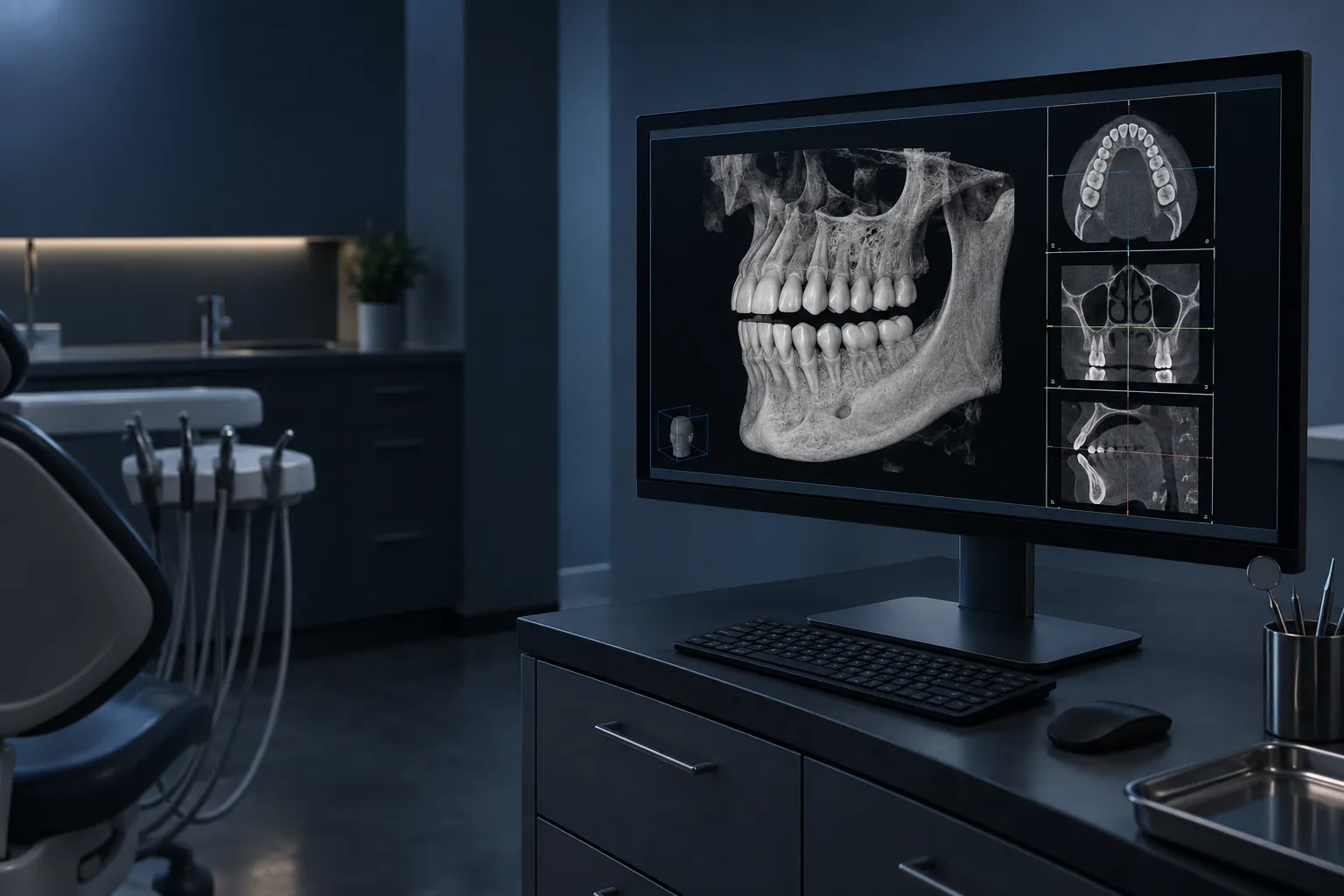
Three-dimensional CT
It shows the shape of the roots and the extent of inflammation at the root tip. Much of this is lost on a standard X-ray.
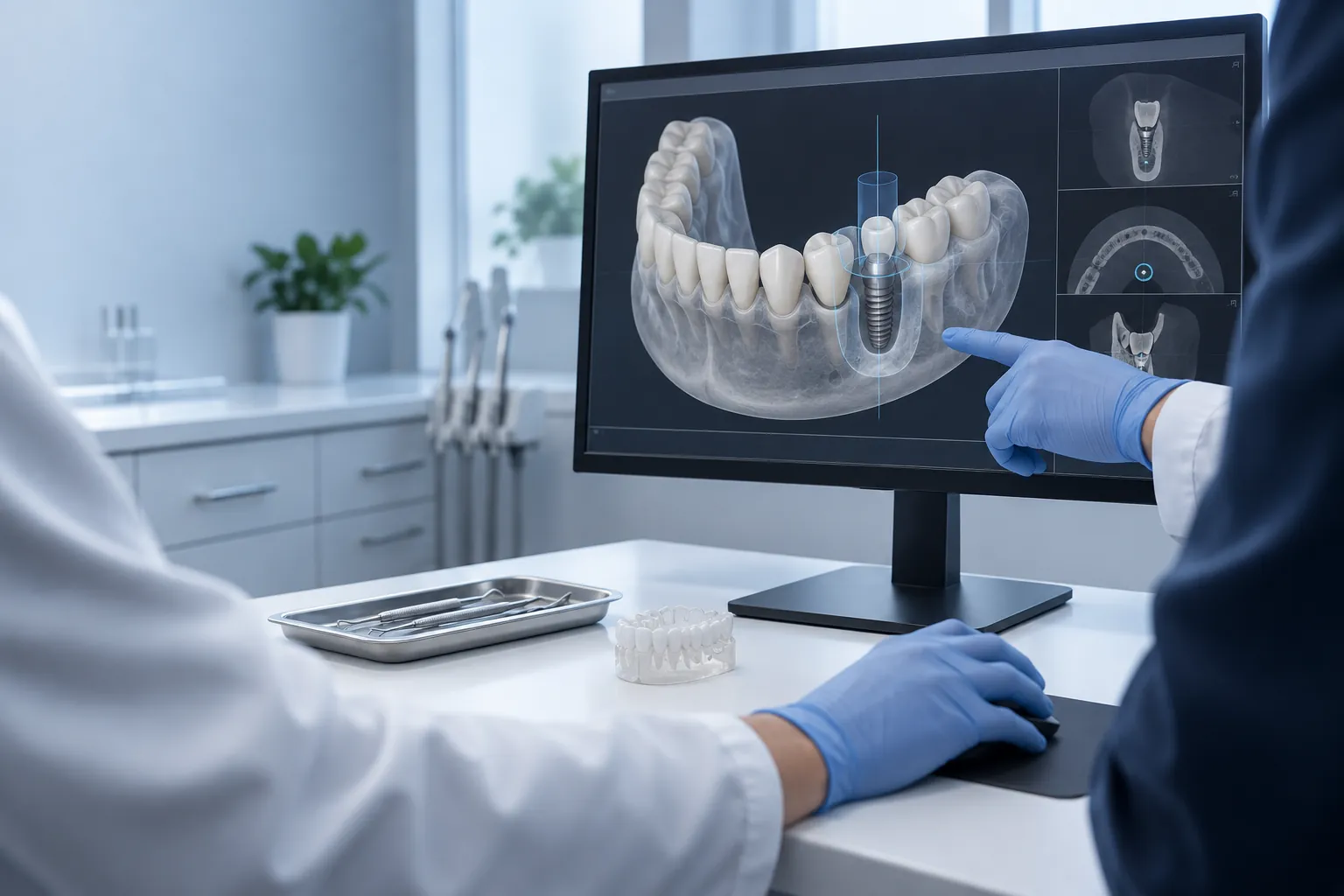
Digital planning
We go through the procedure in advance — including how the tooth will be built up and protected after treatment.
Thanks to this, we can now save teeth that would once have ended up being extracted.
How we work
Diagnosis
An X-ray and vitality tests show whether the pulp is affected and to what extent.
Treating the canals
Under local anaesthetic, we remove the inflamed tissue and clean, disinfect and fill the canals.
Build-up and protection
The tooth receives a filling or a core build-up and, most often, a crown to protect it from cracking.
What we treat in this field
Affected dental pulp
Deep decay that has reached the pulp, or pulp that has died after an injury to the tooth.
Pain that keeps you awake
Pain that wakes you up or gets worse when you lie down. A typical sign of inflammation of the pulp.
Inflammation at the root tip
A lesion on the X-ray, an abscess or a fistula — inflammation that has found its way out.
Unsuccessful previous treatment
Retreatment of a canal that was treated before, where the problems have returned.
Treatments in this field
An overview of what we do in this field. Prices are listed in our price list.
Clinical cases
See cases of patients from our Prague centre, with before and after comparisons.
Who works in this field
Agreements and partnerships
Contracted health insurance companies and programme partners.
Contracted health insurance companies
- Všeobecná zdravotní pojišťovna (General Health Insurance Company) — VZP (111)
- Vojenská zdravotní pojišťovna (Military Health Insurance Company) — VoZP (201)
- Česká průmyslová zdravotní pojišťovna (Czech Industrial Health Insurance Company) — ČPZP (205)
- Oborová zdravotní pojišťovna (Industry Health Insurance Company) — OZP (207)
- Zaměstnanecká pojišťovna Škoda (Škoda Employee Insurance Company) — ZPŠ (209)
- Zdravotní pojišťovna ministerstva vnitra (Health Insurance Company of the Ministry of the Interior) — ZP MV ČR (211)
Programme partners
Sodexo
Sodexo provides services based on a combination of different capabilities and skills. It can currently be used only for dental hygiene and fillings.
Benefit Plus
External administration of employee benefits. It can currently be used only for dental hygiene and fillings.
Frequently asked questions
How do I know that I need treatment?
Severe or persistent toothache, especially when biting; sensitivity to heat and cold that lasts more than a few seconds after the stimulus; swelling of the gum around the tooth. Any of these symptoms is a reason to come in.
Does root canal treatment hurt?
The treatment itself is carried out under local anaesthetic. What hurts is rather the condition that leads to it — inflammation of the pulp.
How many visits does it take?
One to three, depending on the findings. With inflamed teeth, an intermediate step with a medicated dressing is often needed.
Will the treated tooth last?
Yes, with properly filled canals and protection with a crown, for years or even decades. The seal of the filling also matters — a leak lets bacteria back in.
Why does a tooth need a crown after treatment?
A tooth without pulp is more brittle and cracks more easily when chewing. A crown holds it together. Unfortunately, with a cracked root there is usually no option other than extraction.
What if the treatment has not worked?
The tooth can usually be treated again. The canals are reopened, the old filling is removed and the whole procedure is repeated — and with the microscope, we often find a canal that was left untreated before.
Book an appointment
Fill in the form and we will get back to you to find a suitable appointment together.