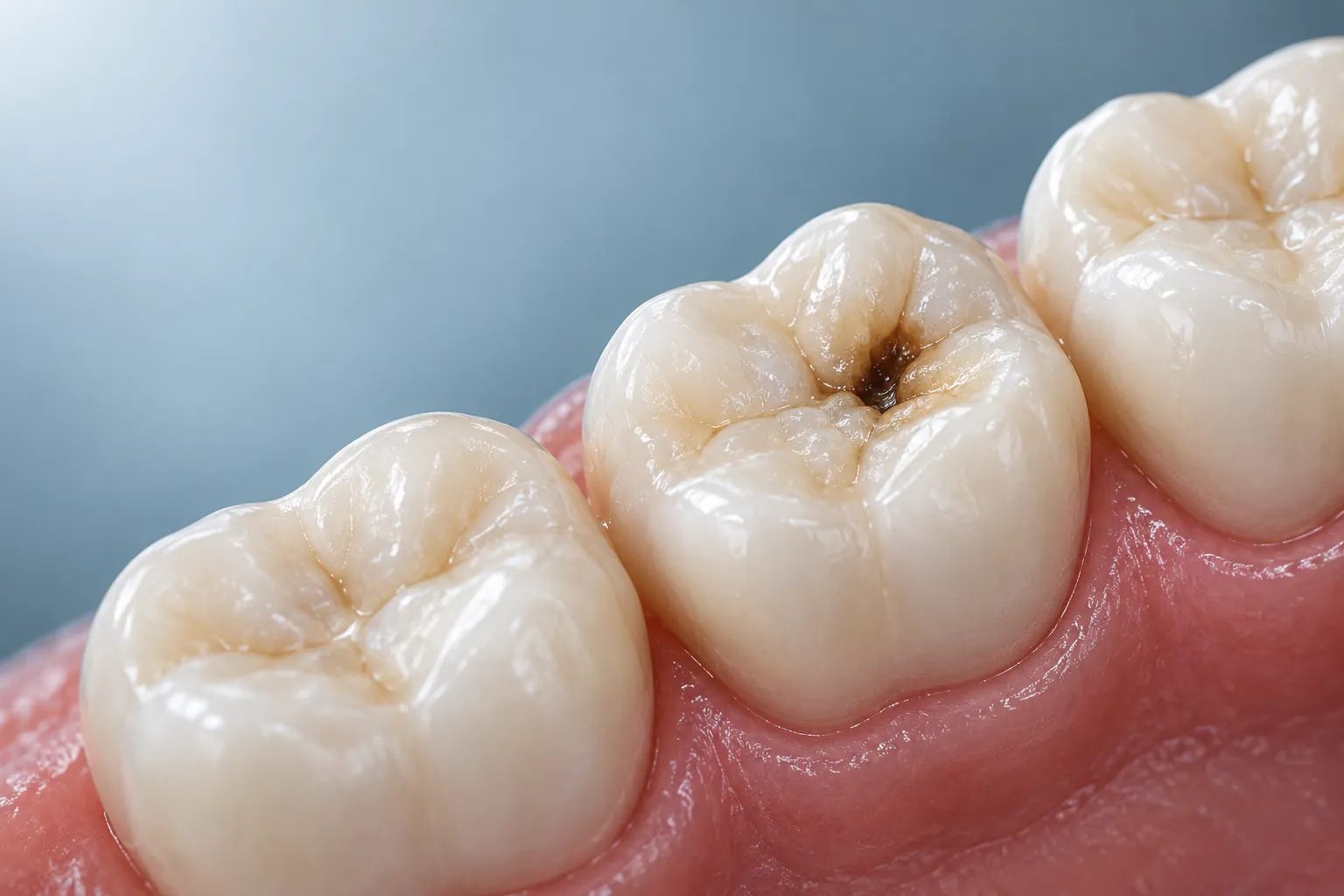
Tooth decay
The most common dental disease. Caught early, it does not hurt.
Some of the visualisations on this page were created with AI.
What is tooth decay?
Tooth decay is damage caused by bacteria that settle on the surface of the tooth. They produce acids that attack the enamel, which gradually breaks down.
Untreated decay spreads into the deeper layers of the tooth, weakens its structure and can lead to pain, infection and other complications.
Main causes
Tooth decay usually develops due to a combination of factors:
- inadequate oral hygiene
- frequent consumption of sugary foods and drinks
- build-up of dental plaque
- reduced saliva production
- irregular dental check-ups
Possible symptoms
Signs vary with the extent and location of the decay. The most common include:
Tooth sensitivity
An unpleasant or painful sensation with hot, cold and sweet things. Sensitivity can mean that the decay has reached the deeper layers of the tooth.
Discolouration on the tooth surface
Brown, black or white spots are a visible sign of enamel demineralisation and often come before decay develops.
Visible cavity
A hole or crack is visible on the surface of the affected tooth — the result of advancing decay and loss of tooth tissue.
Bad breath
Plaque, decomposing food debris in cavities and the decay itself all contribute to persistent bad breath.
Difficulty chewing
Pain and sensitivity make normal chewing difficult. Your diet then becomes more limited, which can even lead to nutritional deficiencies.
Toothache
Constant or intermittent, usually triggered by hot, cold or sweet things. It ranges from mild to severe and may mean that the decay has reached the dentine or the pulp.
Gum inflammation
Deep decay near the roots and between the teeth can cause inflammation of the surrounding gum, with swelling and pain.
If your symptoms persist or get worse, have your dentist assess them. Even without significant pain, regular check-ups are the surest way to prevent complications.
Available treatment
Treatment depends on the extent of the damage. The most common treatments include:
Topical fluoride
Fluoride treatment helps remineralise the enamel in the early stages of decay. Fluoride strengthens the enamel and makes it more resistant to acids.
Fissure sealing
Applying a protective resin to the chewing surfaces of the teeth prevents decay — used mainly in children and adolescents.
Direct fillings
Composite resin or ceramic replaces the tooth tissue removed together with the decay and restores the tooth’s shape and function.
Crowns
With extensive decay, where a large part of the tooth is damaged, the tooth needs to be covered with a crown that restores its shape, function and appearance.
Root canal treatment
When decay reaches the dental pulp, the infected tissue must be removed and the root canal filled. This saves the tooth, and the pain and infection subside.
Tooth extraction
As a last resort, when a tooth is so damaged that it cannot be saved, it has to be extracted. The lost tooth can then be replaced with an implant or a bridge.
Where we can help
We provide examination and treatment in these areas of care: