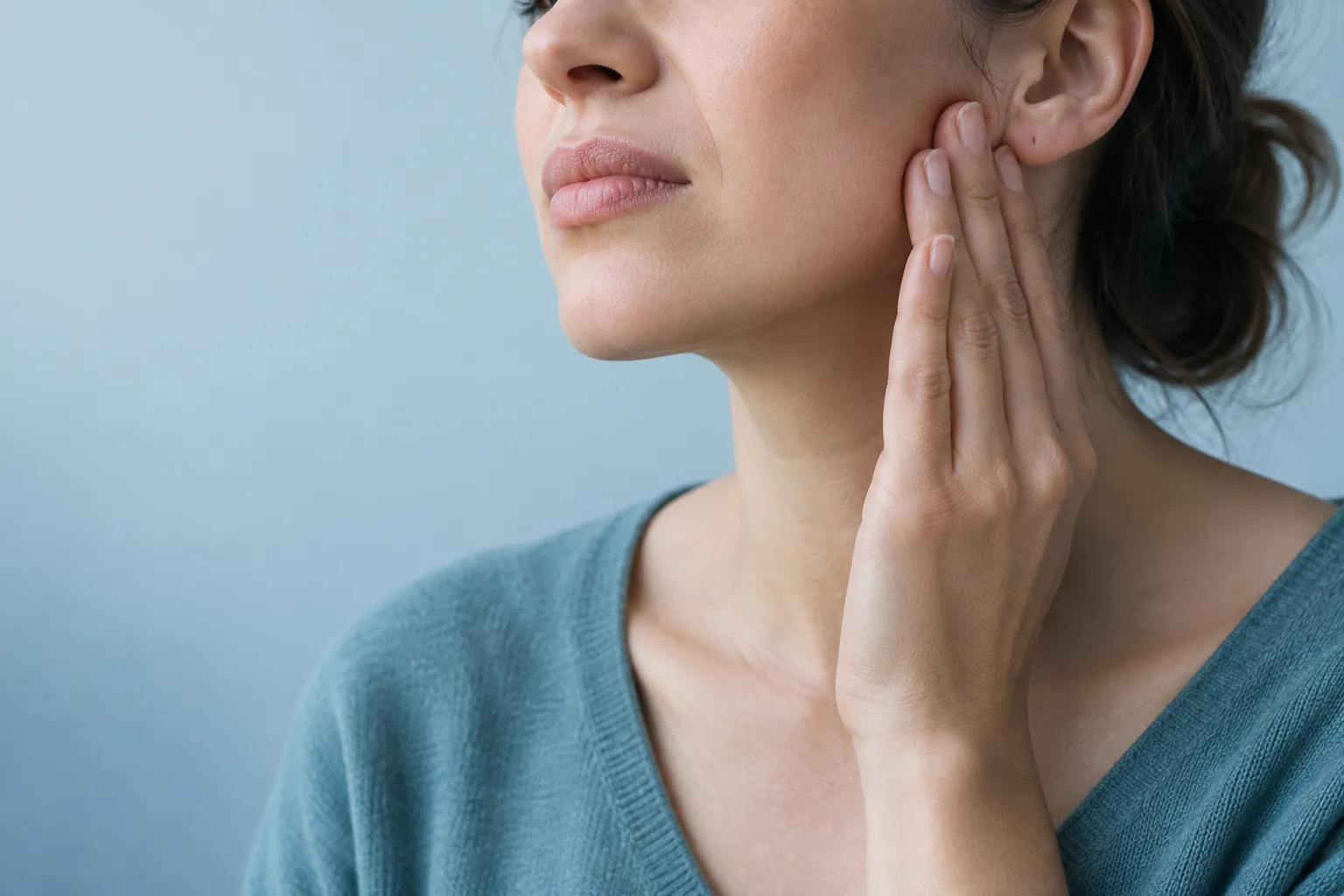
Jaw and facial pain
Pain from the muscles, the joint or a functional disorder.
Some of the visualisations on this page were created with AI.
What is jaw and facial pain?
Jaw pain, or orofacial pain, is common and can affect the mouth, face, jaw joint, chewing muscles and the cervical spine area. Diagnosis starts by identifying where the pain comes from; the most common cause is a jaw joint disorder.
Other conditions may also play a part — sinusitis, infections, neurological changes or problems with the cervical spine. Because of this variety, an accurate diagnosis is essential for effective treatment and relief.
Main causes
Orofacial pain may be caused by a combination of factors:
- tooth or gum infection
- temporomandibular joint (TMJ) disorder
- bruxism
- reduced saliva production
- rheumatic diseases
Possible symptoms
Signs vary depending on the cause. The most common include:
Jaw tenderness or pain
Discomfort or pain when chewing, speaking, swallowing and opening the mouth. Pain can also occur at rest, without any load on the joint.
Difficulty opening and closing the mouth
A feeling that the jaw is locked or stiff, which prevents normal movement.
Headache
Headaches of various kinds, which may be related to a jaw joint disorder or to migraine.
Ear pain or ringing
Discomfort around the ear or ringing in the ears, often associated with a jaw joint disorder.
Clicking and popping in the jaw
Clicking or grating sounds when opening and closing the mouth, which may point to a joint disorder.
Facial swelling
Swelling in the jaw area or around the jaw joint.
Tooth wear
Excessive tooth wear, with or without pain in the teeth, the joint area and the chewing muscles.
If your symptoms persist or get worse, have your dentist assess them. Even without significant pain, regular monitoring is the surest way to prevent complications.
Available treatment
Treatment always depends on the cause and severity of the problem — which is why diagnosis comes first. Options include:
Dental treatment
If the pain is dental in origin, it may be caused by decay (with or without pulp involvement), periodontal disease, or loss of tooth tissue and the resulting sensitivity after wear, injury, gum recession or acid erosion.
Occlusal splints
If the pain comes from a jaw joint disorder, relaxation splints limit tooth wear, relax the muscles and reduce pressure in the joint.
Medication
Pain and inflammation are relieved first and foremost with painkillers and non-steroidal anti-inflammatory drugs. Depending on the diagnosis, muscle relaxants, anxiolytics, antidepressants and other medicines acting on the central nervous system may also be used.
Surgery
For severe jaw joint disorders where conservative treatment does not work, surgery may be considered — from minimally invasive procedures to more complex operations.
Behavioural therapy
Stress management techniques, such as biofeedback or cognitive behavioural therapy, help where the pain is related to stress or anxiety. Managing stress means less muscle tension and therefore less pain.
Where we can help
We provide examination and treatment in these areas of care: