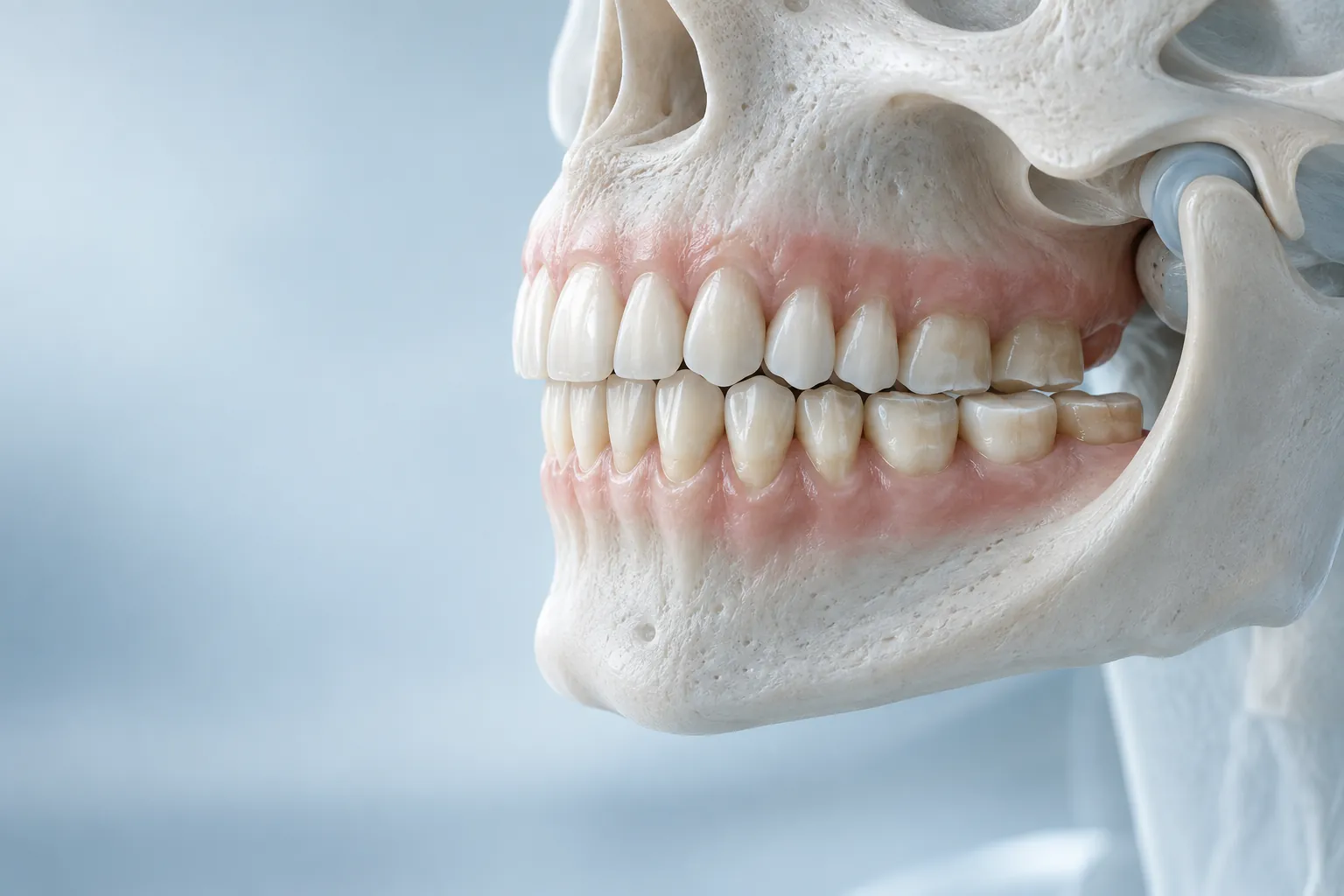
Bruxism
Clenching and grinding of the teeth that wears down the enamel.
Some of the visualisations on this page were created with AI.
What is bruxism?
Bruxism is involuntary, repetitive muscle activity in which a person clenches or grinds their teeth. It can happen while awake or during sleep.
Awake bruxism is linked to psychosocial factors — stress, anxiety and depression — and to habits such as nail biting or jaw clenching. Sleep bruxism tends to be associated with disturbances of the sleep cycle, changes in the central nervous system and the use of certain medicines or substances.
Main causes
Bruxism rarely has a single cause. It is most often due to a combination of these factors:
- stress, anxiety and other psychosocial factors
- sleep disorders
- an incorrect bite (malocclusion)
- use of stimulants — caffeine, alcohol, nicotine
- certain medicines and changes in the central nervous system
Possible symptoms
Symptoms vary depending on how severe and how frequent the bruxism is. The most common include:
Tension or pain
Many patients do not know they grind their teeth until someone close to them points it out. Night-time jaw movements show up in the morning as tension or pain in the face and neck. Sensitive teeth and small abrasions on the lining of the mouth are also common.
Jaw joint disorder
Disorders of the temporomandibular joint, which connects the temporal bone to the lower jaw, have several causes, but bruxism is a very common trigger. They show up as pain or clicking in the joint, limited mouth opening and headaches.
Tooth wear and fractures
The strong pressure of involuntary movements wears the teeth down and, in extreme cases, leads to a cracked tooth or filling.
If your symptoms persist or get worse, or you notice visible changes to your teeth, have your dentist assess them.
Available treatment
There is no definitive cure for bruxism, but it can be managed and reduced. The first step is to become aware of it and identify the possible causes. There are several ways to reduce its effects:
Occlusal splints
Removable splints made from an impression of your teeth and worn over the upper or lower teeth. They spread the pressure, relax the chewing muscles, reduce friction and protect the teeth, muscles and joint.
Physiotherapy
Where muscle and joint problems are already present, physiotherapy is a strong ally. It can significantly reduce or eliminate pain and improve jaw mobility.
Relaxation techniques
Meditation, breathing exercises and muscle stretching help reduce the stress and muscle tension that accompany bruxism.
Changing habits
Reducing stress and anxiety is essential — through exercise, relaxation or psychotherapy. The patient learns to notice bruxism, mainly during the day, and builds in regular checks on whether they are clenching their teeth; reminders on a mobile phone can help. Cutting down on alcohol, caffeine and other stimulants is also beneficial.
Sleep hygiene
A regular routine and surroundings that let both body and mind rest. Avoid screens, heavy meals, alcohol and caffeine before bed; the bedroom should be quiet and dark, and you should get enough sleep.
Medication
In acute cases, anti-inflammatory drugs or muscle relaxants can be used for a short time to relieve pain, muscle tension and inflammation. They should always be taken under a doctor’s supervision.
Where we can help
We provide examination and treatment in these areas of care: