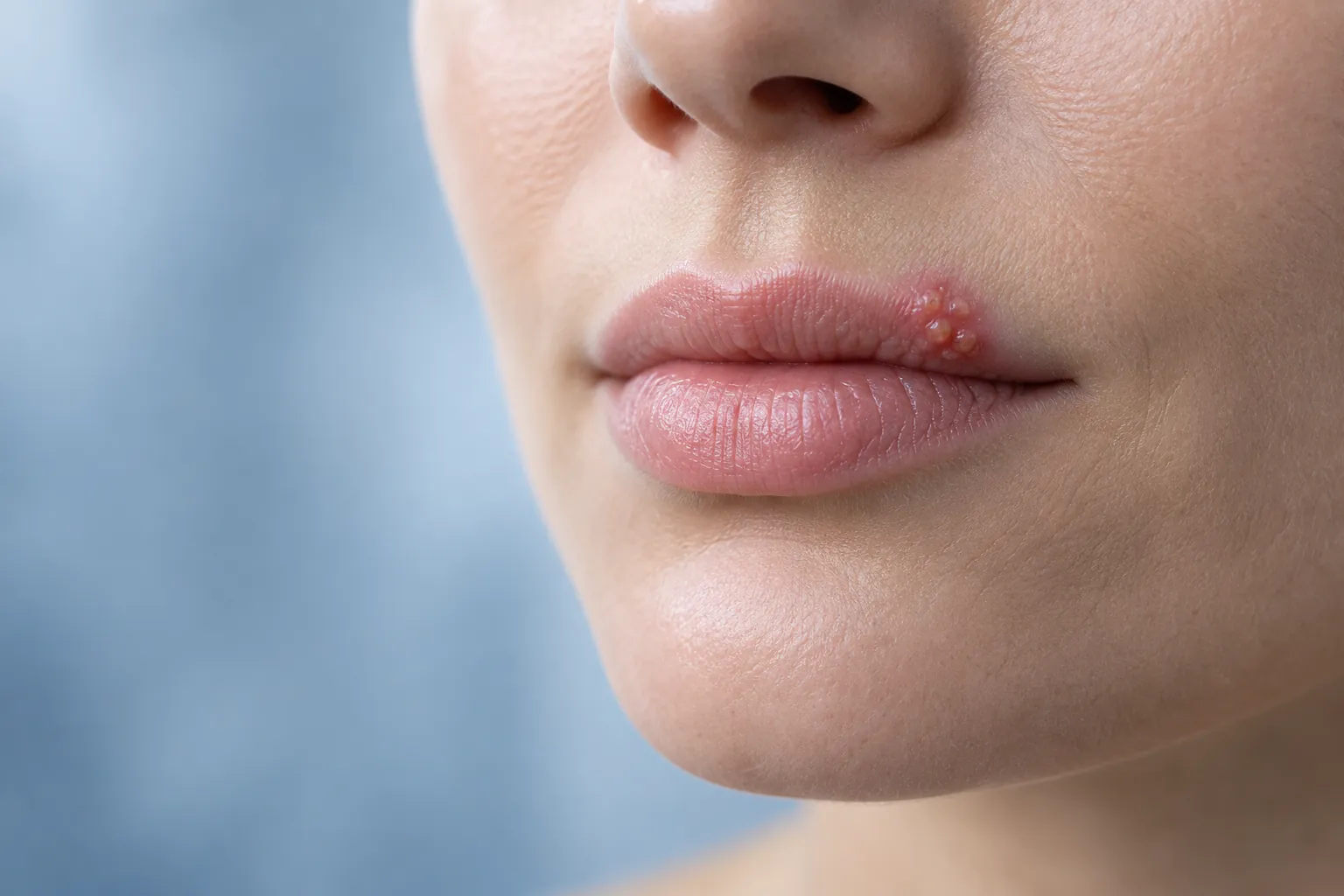
Cold sores
A viral infection of the lips and the area around the mouth.
Some of the visualisations on this page were created with AI.
What are cold sores?
Cold sores are a viral infection most often caused by herpes simplex virus type 1 (HSV-1). They appear as small, painful blisters on the lip or around the mouth, which later turn into scabs.
The virus stays in the body in a dormant form and is reactivated by stress, sun exposure or weakened immunity. It is highly contagious — it spreads through direct contact, kissing or sharing objects, even when no signs are visible.
Main causes
Cold sores usually develop due to a combination of factors:
- infection with HSV-1
- direct contact with an active sore
- contact with contaminated objects
- reactivation of the dormant virus — stress, sun, weakened immunity
- hormonal changes
Possible symptoms
Symptoms differ from person to person and tend to be stronger with the first infection than with later reactivations. The main ones are:
Itching and tingling
Sores usually start with itching, tingling or burning in the affected area — a sign that the virus is becoming active.
Blisters forming
Small fluid-filled blisters appear on the lip or around the mouth. They may cluster together and vary in size.
Pain and tenderness
The blisters and the surrounding area hurt, which is bothersome when chewing, speaking and even at rest.
Blisters bursting
The blisters burst, leaving a shallow, painful sore. This usually dries into a yellowish scab and then heals.
Fever and malaise
Particularly with the first infection, general symptoms may also appear — fever, swollen lymph nodes and tiredness.
If your symptoms persist or get worse, have a professional assess them.
Available treatment
Cold sores cannot be cured permanently, but there are treatments that relieve symptoms, speed up healing and reduce how often they come back:
Local care
A cold compress relieves pain and reduces swelling. Do not touch or squeeze the sores — this lowers the risk of a secondary infection. Soothing products such as aloe vera gel can also be used.
Topical antivirals
Ointments and creams applied directly to the sores relieve pain and itching and shorten healing time by stopping the virus from spreading.
Oral antivirals
For more severe or frequently recurring cases, a doctor may prescribe antiviral tablets.
Hygiene
Keep the affected area clean and dry. Wash your hands before and after touching it — this stops the virus spreading to other areas or to other people.
Supporting your immunity
A balanced diet, plenty of fluids and good-quality sleep reduce how often cold sores come back. Reducing stress also helps — meditation, exercise.
Where we can help
We provide examination and treatment in these areas of care: