Implantology
Replacing missing teeth — from a single tooth to a full jaw.
Some of the visualisations on this page were created with AI.
About the field
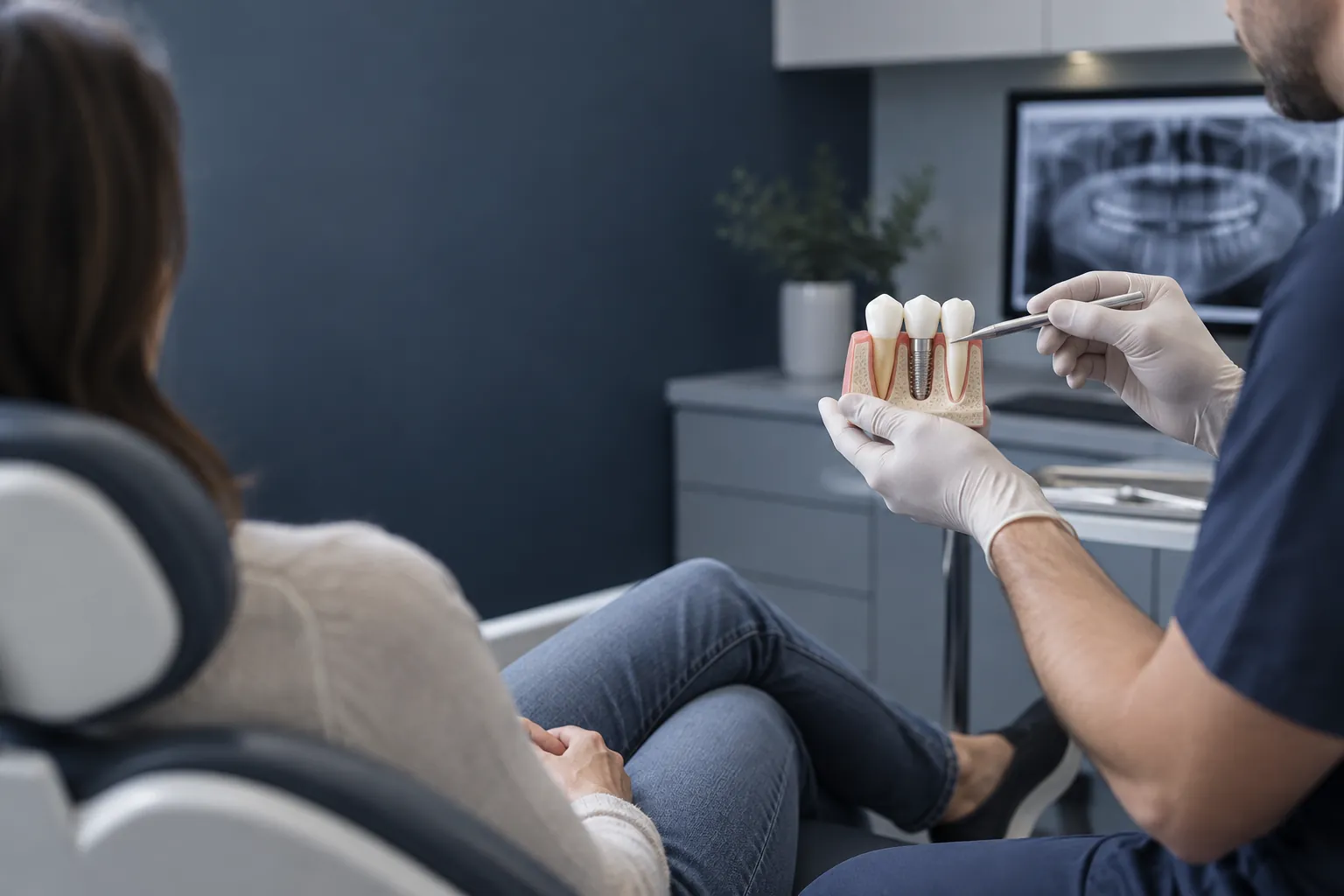
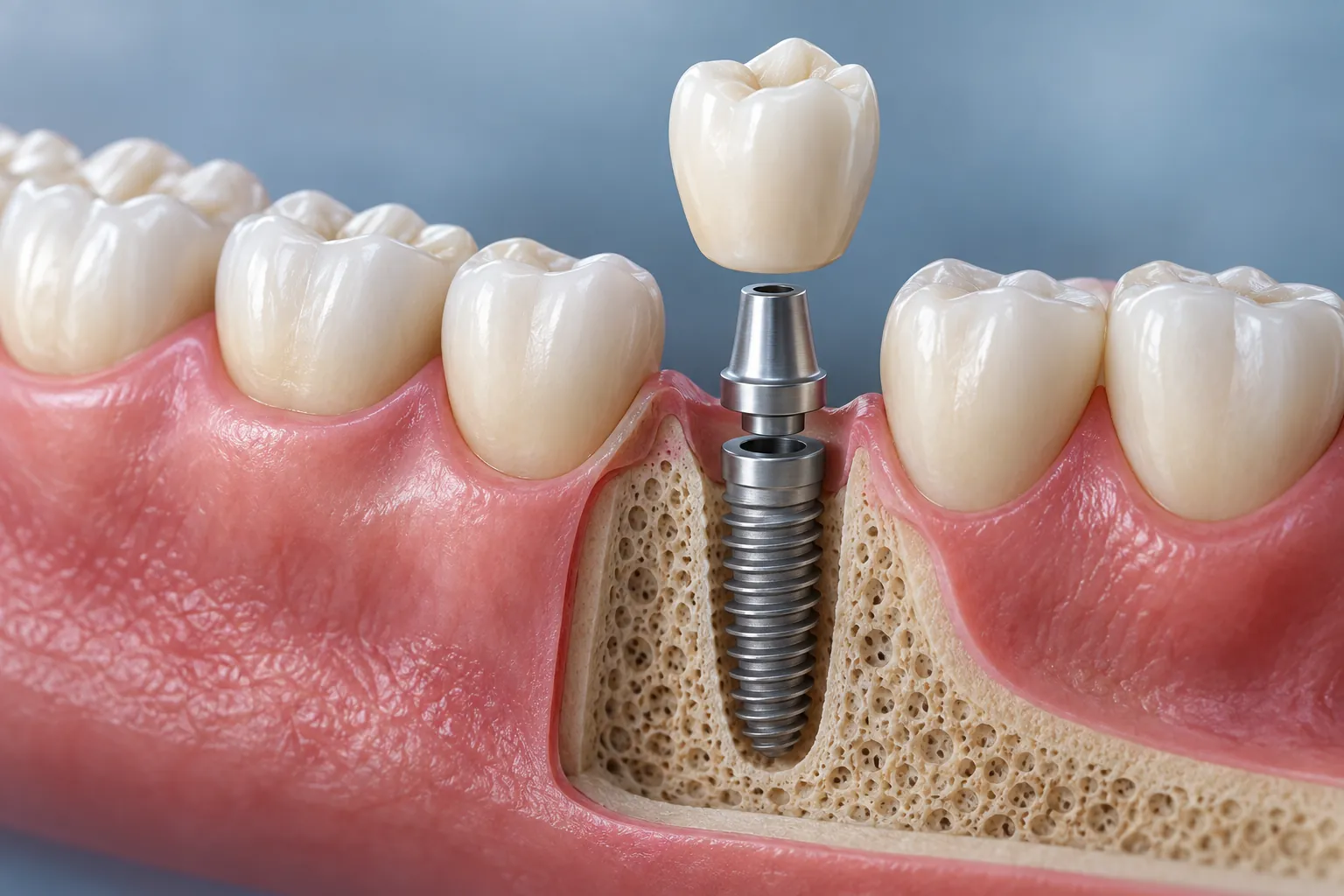
Implantology is the field of dentistry concerned with replacing lost teeth with dental implants. An implant acts as an artificial root placed in the bone — it supports a crown, a bridge or a fixed restoration.
Losing a tooth affects more than the appearance of your smile. It changes chewing, speech and the health of the mouth as a whole. Implantology restores these functions safely, taking into account each patient’s individual situation.
At MALO CLINIC Prague, implantology is the work of an experienced team, and we rely on digital technology — from an intraoral scanner to three-dimensional CT. This allows us to plan every treatment precisely.
Solutions according to the extent of tooth loss
Every case is different. The solution depends on how many teeth are missing and what the patient needs.
One missing tooth
A single implant is the most suitable option. It supports a fixed, custom-made crown that matches your own tooth in shape, colour and function. The neighbouring teeth do not need to be ground down.
Several missing teeth
We replace several missing teeth with a fixed implant-supported bridge. It is held by the implants alone and puts no load on your remaining natural teeth.
All teeth missing
A whole upper or lower jaw can be restored with a fixed implant-supported restoration. With the Straumann® Pro Arch solution, the number and position of the implants are planned according to the specific clinical situation.
What implants offer
A restoration that lasts
Implants are a long-term solution to tooth loss. They last considerably longer than removable dentures.
Natural appearance
Implant-supported restorations are designed to look like your own teeth. They restore both your appearance and your confidence.
Clear speech
A poorly fitting denture changes how you pronounce words. Implants hold the restoration firmly, so your speech stays natural.
Preserving bone
After a tooth is lost, the bone shrinks. An implant continues to load the bone during chewing and so helps maintain its density.
Full chewing ability
Implants work like natural teeth. Chewing is efficient and comfortable, which matters for digestion and nutrition.
Comfort and stability
Unlike removable dentures, implants are fixed. There is no denture sinking into the gums and no discomfort from it moving.
The technology we rely on
Our implantology is supported by digital technology: an intraoral scanner, three-dimensional CT and digital planning systems.
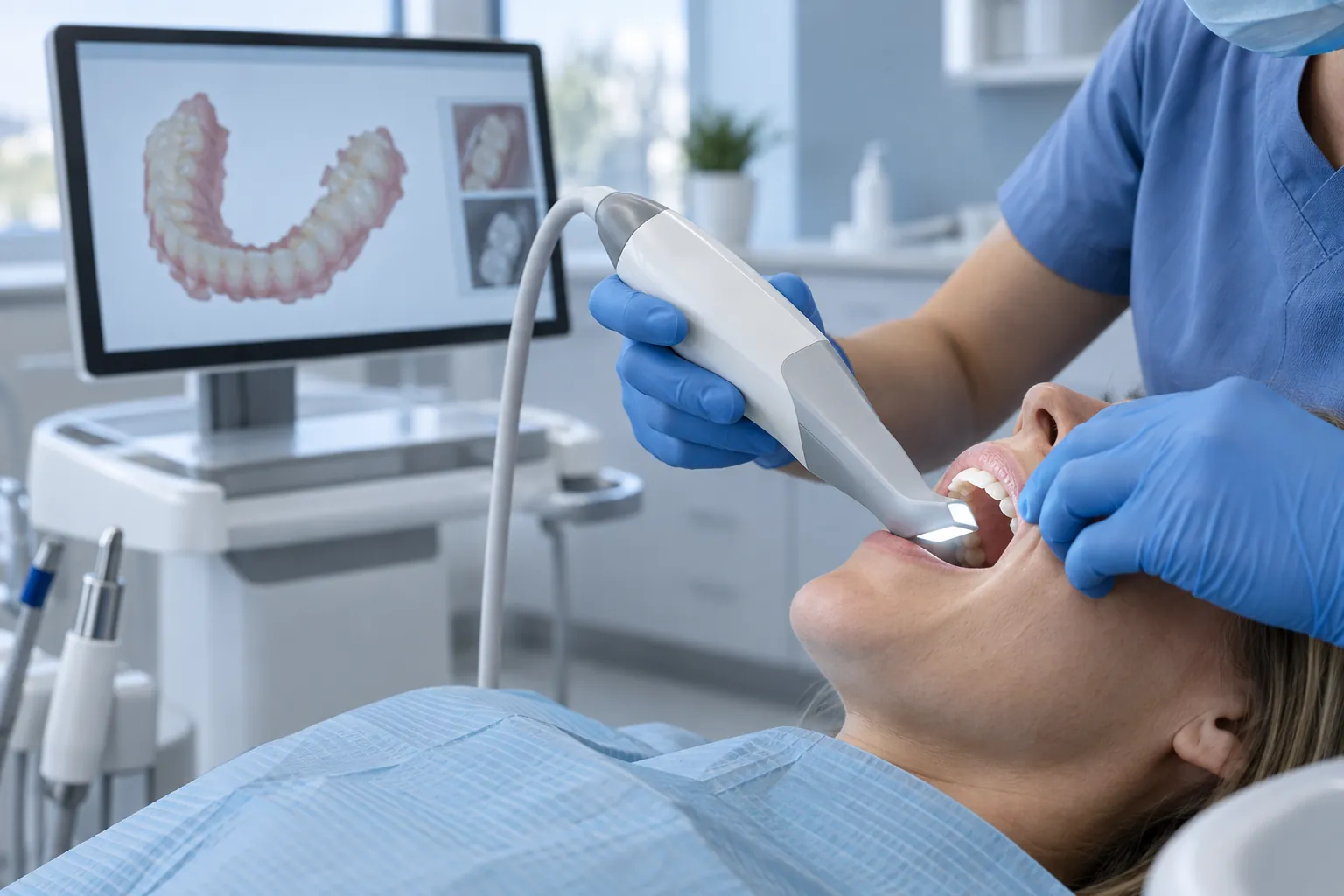
Intraoral scanner
An impression without impression material. The scan is accurate and much more comfortable for the patient.
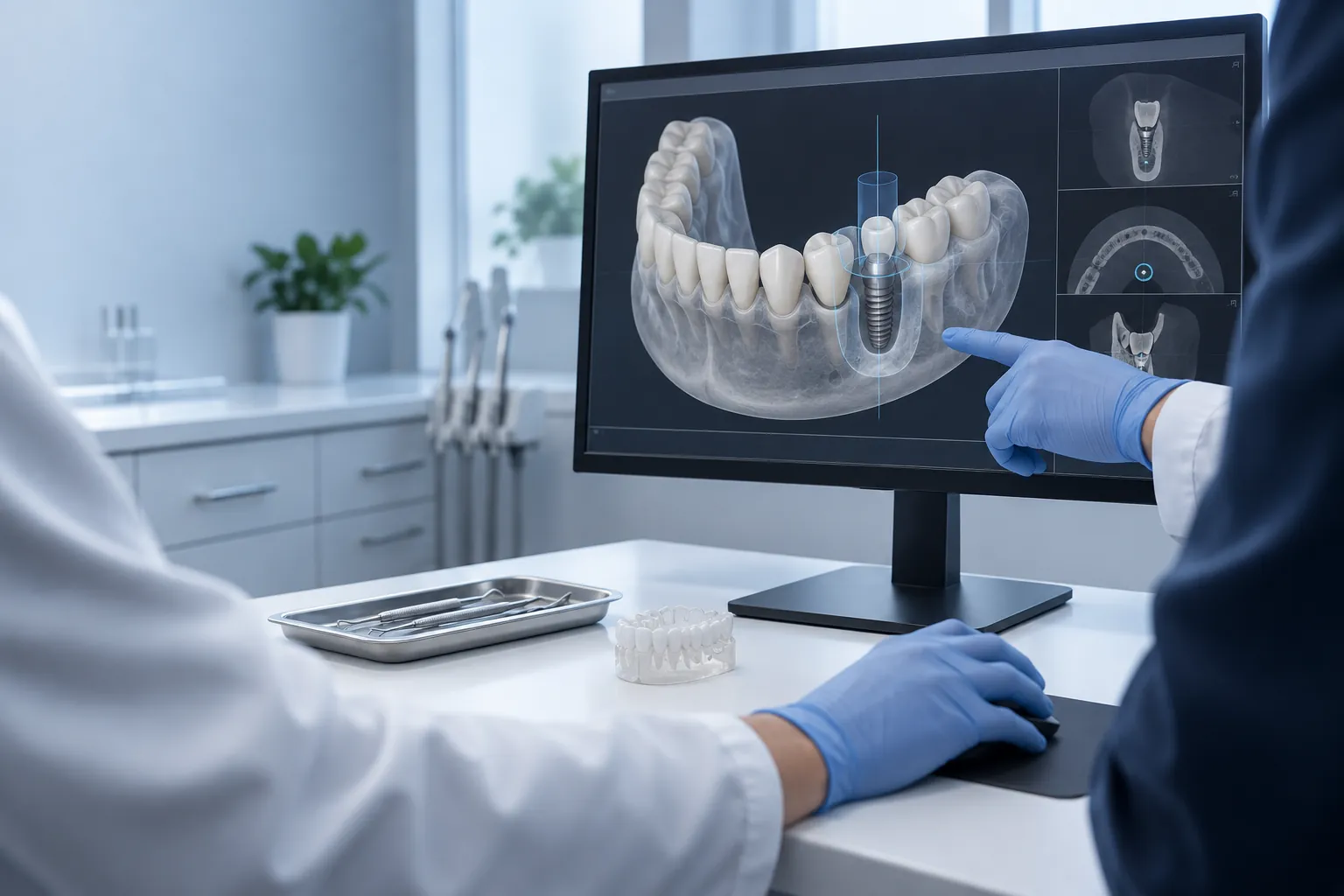
Digital planning
We prepare the course of treatment in advance: we choose the best position for the implants and reduce the room for error.
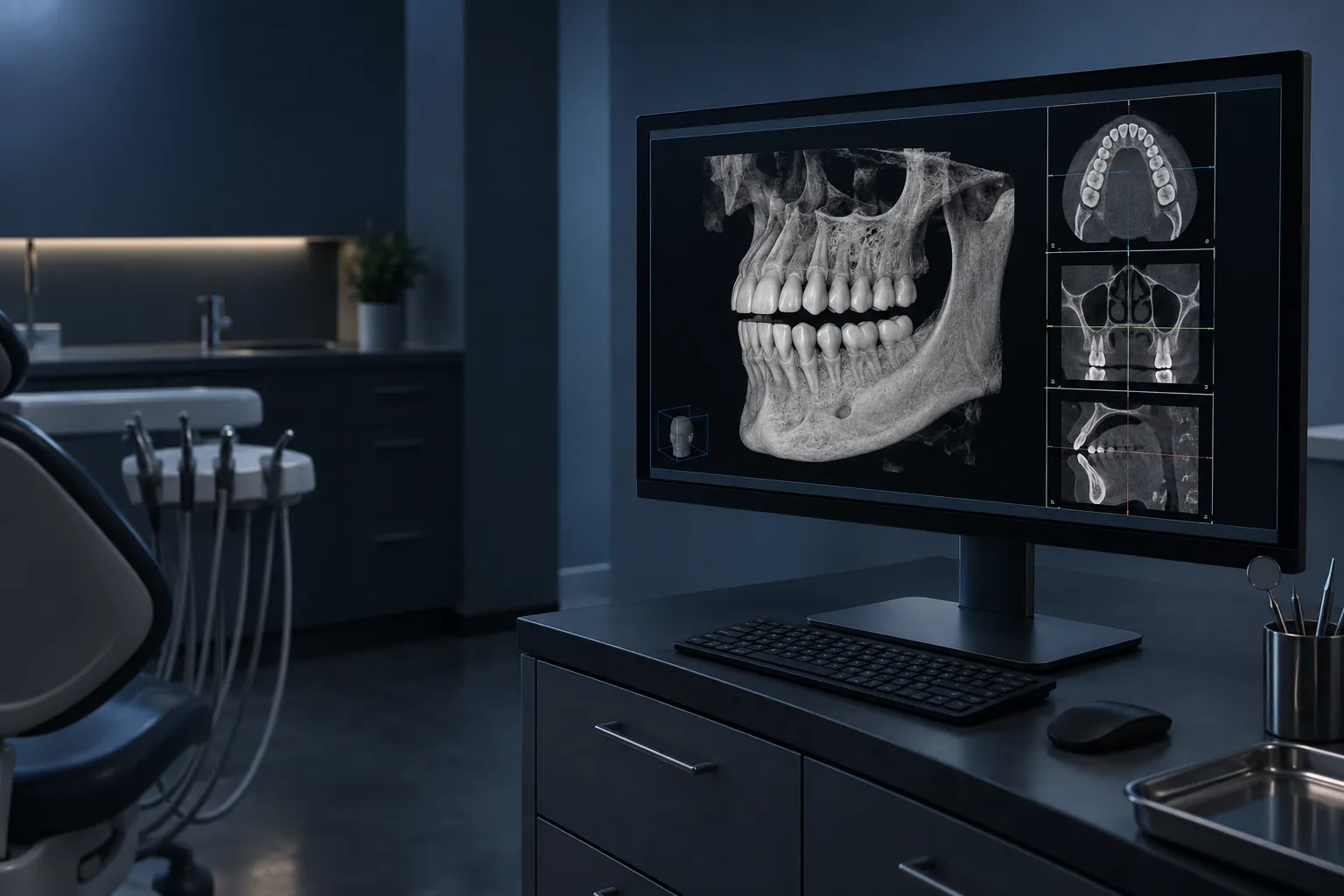
Three-dimensional CT
A detailed view of the bone and surrounding structures. Without it, implant placement cannot be planned safely.
The result is safer and more predictable treatment — and greater comfort for the patient.
What we treat in this field
Loss of a single tooth
Replacing one missing tooth without involving the neighbouring teeth.
Loss of several teeth
Replacing several missing teeth with fixed implant-supported bridges.
Loss of all teeth
Restoring a whole upper or lower jaw with a fixed restoration supported most often by four implants.
Bone loss
Losing your own teeth leads to gradual bone loss. Implant treatment helps stop it.
Treatments in this field
An overview of what we do in this field. Prices are listed in our price list.
Clinical cases
What can restoring a smile with implants look like? Use the slider to compare images before and after treatment.




We publish images with our patients’ consent. Treatment options and results always depend on the specific situation.
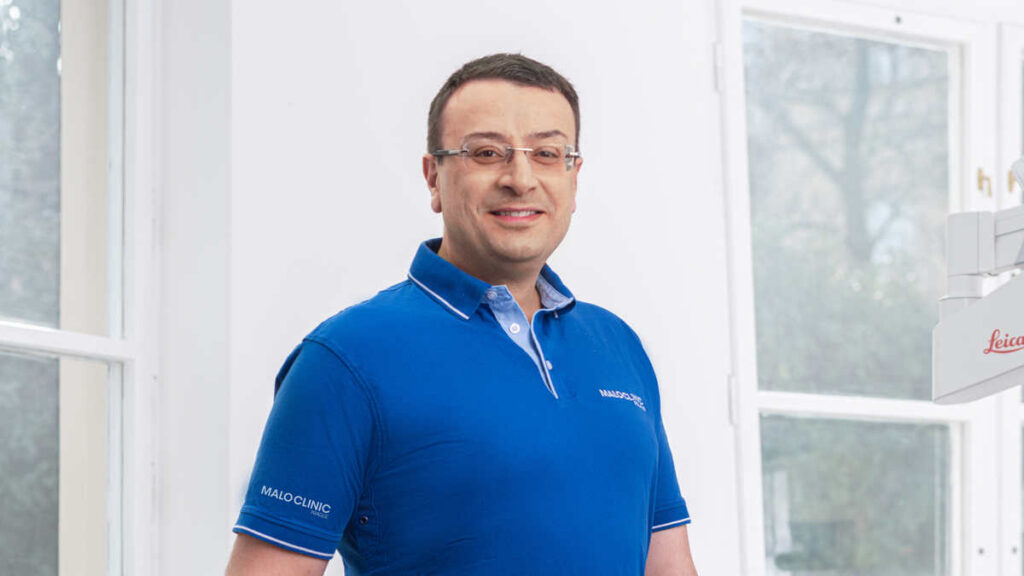
Who works in this field
Agreements and partnerships
Contracted health insurance companies and programme partners.
Contracted health insurance companies
- Všeobecná zdravotní pojišťovna (General Health Insurance Company) — VZP (111)
- Vojenská zdravotní pojišťovna (Military Health Insurance Company) — VoZP (201)
- Česká průmyslová zdravotní pojišťovna (Czech Industrial Health Insurance Company) — ČPZP (205)
- Oborová zdravotní pojišťovna (Industry Health Insurance Company) — OZP (207)
- Zaměstnanecká pojišťovna Škoda (Škoda Employee Insurance Company) — ZPŠ (209)
- Zdravotní pojišťovna ministerstva vnitra (Health Insurance Company of the Ministry of the Interior) — ZP MV ČR (211)
Programme partners
Sodexo
Sodexo provides services based on a combination of different capabilities and skills. It can currently be used only for dental hygiene and fillings.
Benefit Plus
External administration of employee benefits. It can currently be used only for dental hygiene and fillings.
Frequently asked questions
What is a dental implant?
A titanium replacement for a tooth root, placed in the bone of the upper or lower jaw. It serves as the foundation for a fixed restoration — a single crown, a bridge or a full-arch restoration.
Who is an implant suitable for?
Patients in good general and oral health, with healthy gums and enough bone. Diabetes, osteoporosis or other conditions do not in themselves rule out implant treatment — we assess them individually.
Does implant placement hurt?
The procedure is carried out under local anaesthetic, so you do not feel pain during it. Mild swelling or discomfort afterwards is normal; it is relieved with standard painkillers, which we will prescribe.
How long does the whole process take?
The procedure itself takes about 1 to 3 hours, depending on the complexity of the case. Whether we fit a fixed or first a temporary restoration on the same day is agreed at the consultation. The whole treatment, however, is only complete after 4 to 6 months — the time needed for osseointegration.
What is osseointegration?
A biological process in which the titanium implant fuses with the jawbone. This creates a stable foundation for the final fixed restoration, on which the long-term success of treatment depends.
How do I look after implants?
Just like your own teeth: daily brushing and flossing, plus any other aids recommended by your dentist or dental hygienist. Regular check-ups are also important.
How long does an implant last?
The success rate of implants is around 98%. The long-term result depends on your general health, bone quality, attending check-ups and oral hygiene.
Can I replace a removable denture with implants?
Yes. A fixed implant-supported restoration is more comfortable and more stable, and it works better for chewing and speaking. It also does not irritate the surrounding tissues and helps stop bone loss.
Book an appointment
Fill in the form and we will get back to you to find a suitable appointment together.