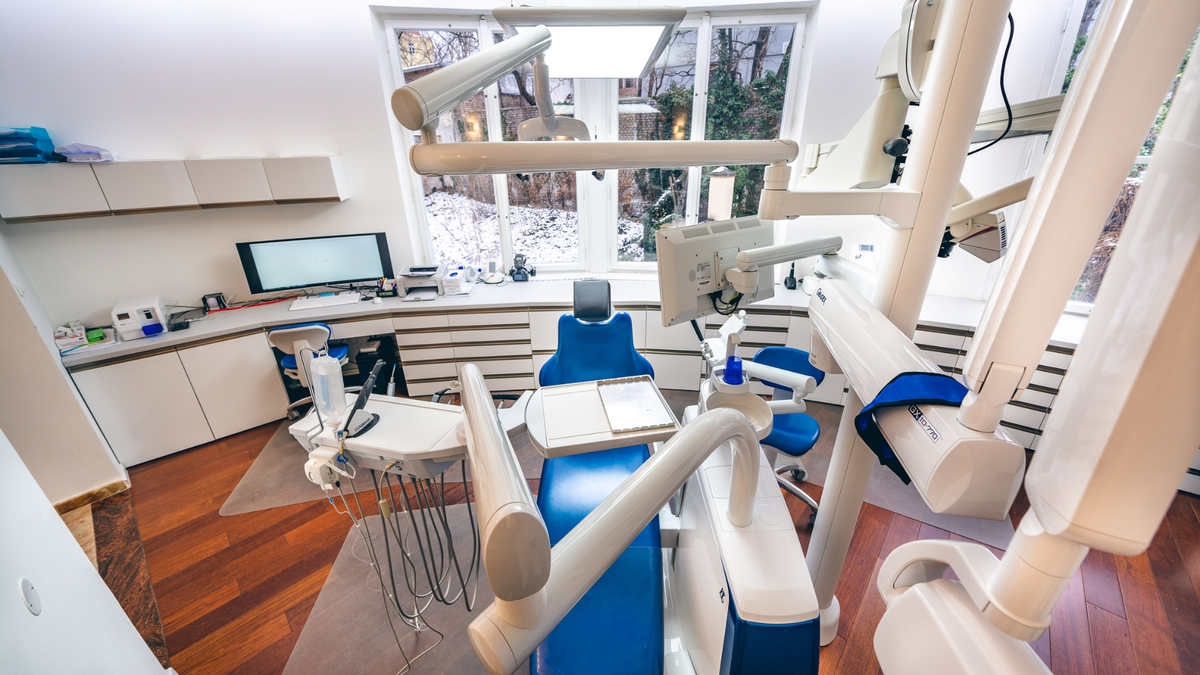
Oral surgery
Procedures in the mouth — from extractions to preparation for implants.
Some of the visualisations on this page were created with AI.
About the field
Oral surgery deals with what cannot be managed conservatively: teeth that have to be removed, and procedures on the bone and soft tissues of the mouth.
This also includes preparing the site for implants — bone augmentation where bone has been lost after tooth loss, and gum procedures.
The specialty is also important where more than a single tooth is involved: it plays a part in treating serious infections and in complex reconstructions that cannot be done without a surgical step.
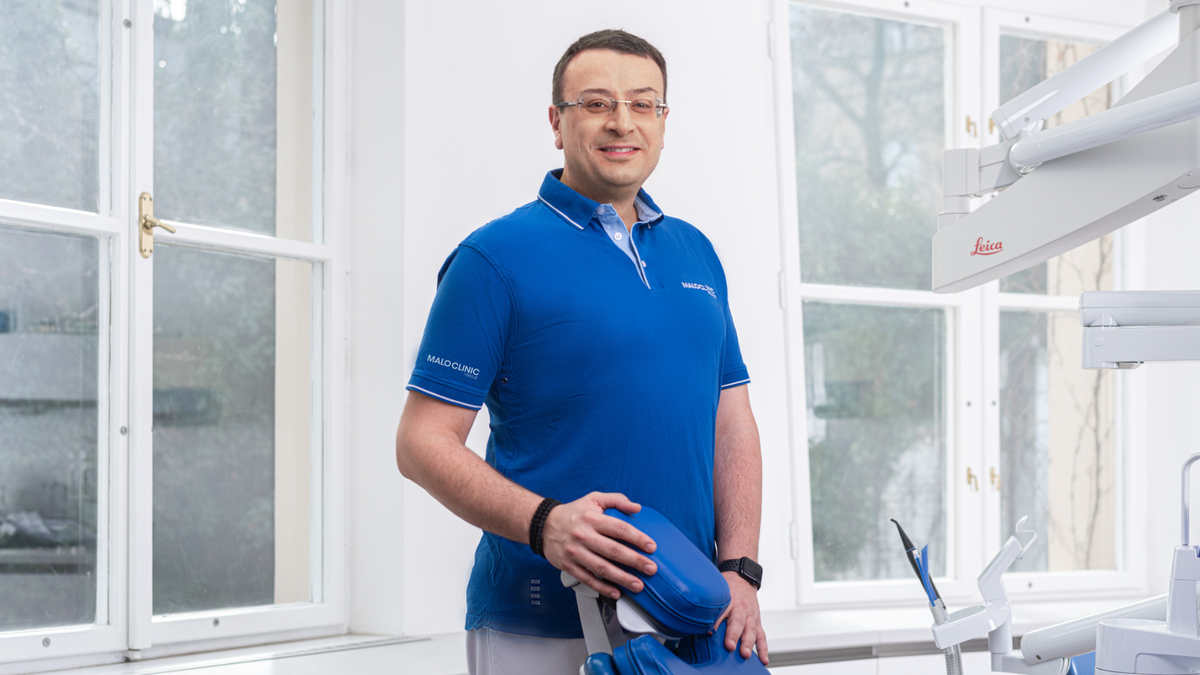
Our clinical director holds a specialist qualification in oral surgery and spent six years at the department of maxillofacial surgery of the First Faculty of Medicine. This means we do not have to refer more complex cases elsewhere.
What surgical treatment offers
Early detection of serious conditions
Surgery can identify and treat cysts and other lesions before they have a chance to grow.
Preventing complications
Timely treatment prevents an infection or a seemingly minor problem from turning into an abscess or the loss of a tooth.
Restoring function
Procedures such as placing an implant or reconstructing bone restore chewing, speech and appearance.
Treating long-term pain
The specialty also deals with the causes of chronic pain in the mouth and jaw, including problems with the jaw joint.
Consideration for your general health
Inflammation in the mouth does not stay in the mouth. Surgical treatment limits its impact on the body.
A site prepared for a restoration
Adding bone and reshaping the gum determine whether a future implant or restoration will hold.
The technology we rely on
Our surgery is supported by digital technology: an intraoral scanner, three-dimensional CT and digital planning systems.
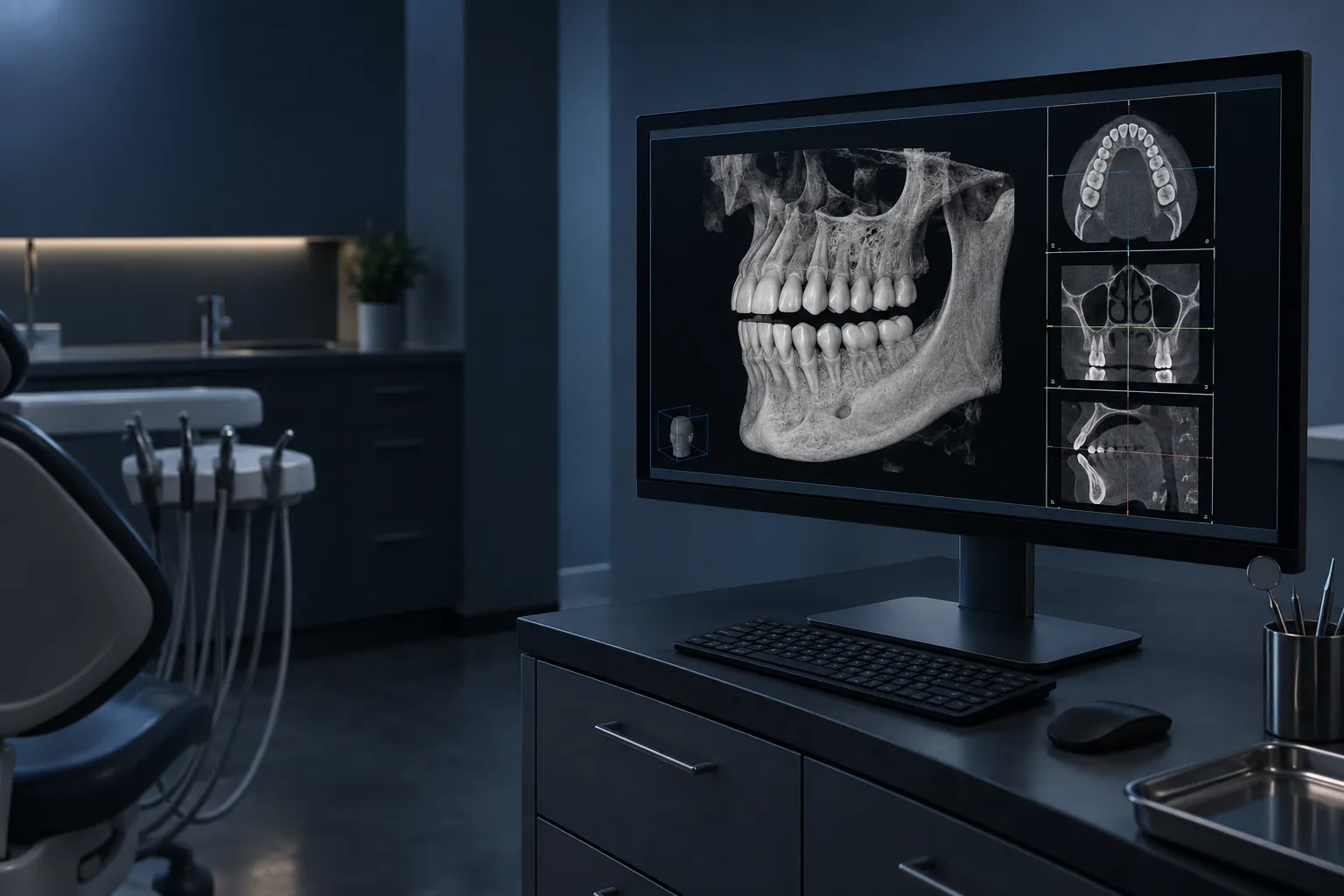
Three-dimensional CT
It shows the position of the tooth in relation to the nerve and the maxillary sinus. With wisdom teeth, this is exactly what determines the approach.
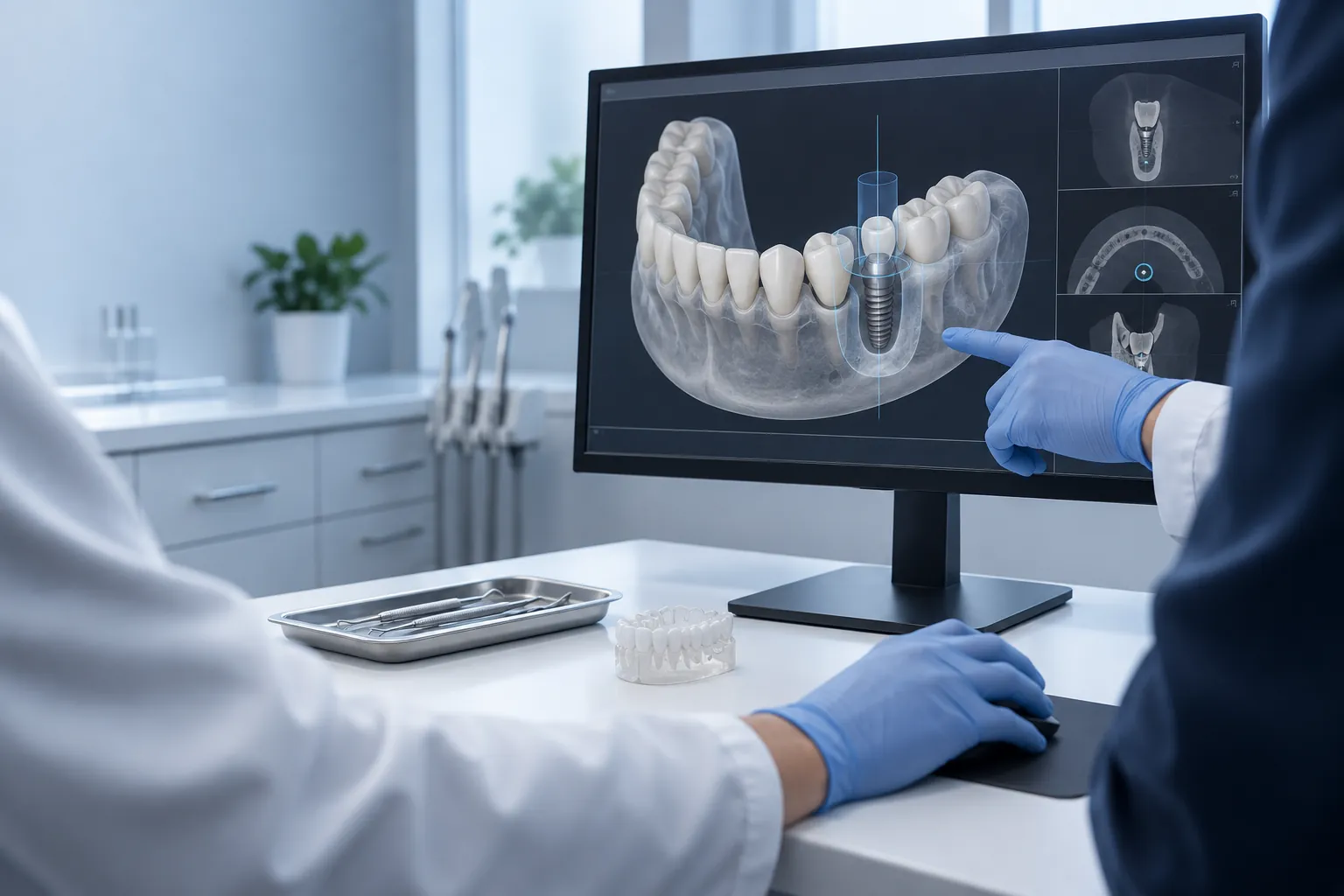
Digital planning
We go through the procedure in advance. A predictable procedure is safer and usually shorter.
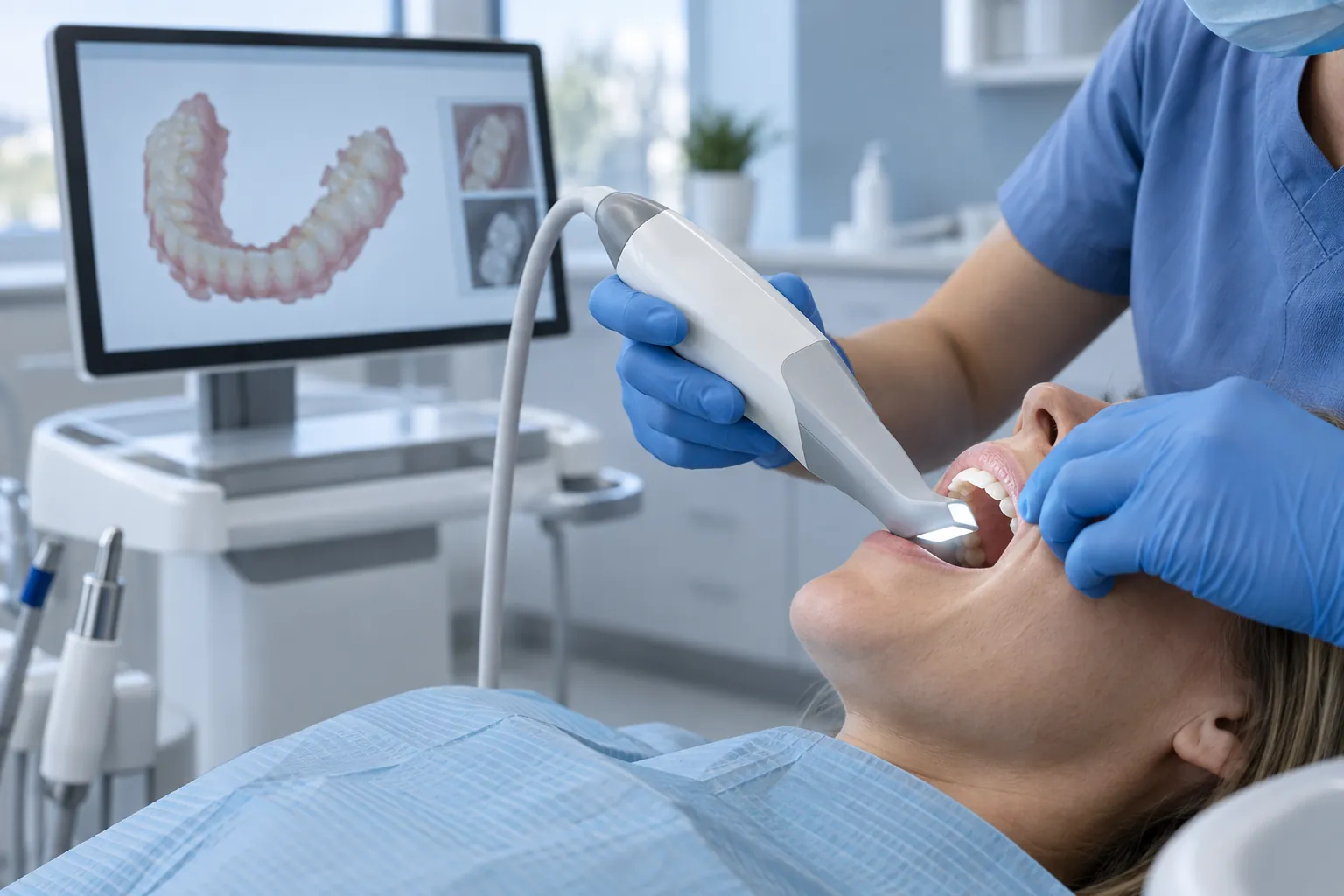
Intraoral scanner
An impression without impression material. The basis for the surgical guide and for the later restoration.
The result is a procedure where it is known in advance what will happen — and which is therefore safer and more comfortable.
How we work
X-ray and assessment
Every procedure is preceded by an X-ray. With wisdom teeth, the position in relation to the nerve and the sinus is decisive — we do not start until we know it.
Local anaesthetic
Procedures are carried out under local anaesthetic. For anxious patients, sedation can be added.
Gentle technique
We work so as to preserve as much bone as possible — bearing in mind that an implant may later be placed at the site.
Aftercare
You will receive clear instructions for the first few days and a follow-up appointment. Most complications arise from not following the aftercare instructions, not from the procedure itself.
What we treat in this field
Tooth extractions
From simple extractions to impacted wisdom teeth and teeth in a difficult position.
Treating infections
Abscesses and inflammation around the root tip, and their surgical treatment, including apicectomy.
Cysts and lesions
Removal of cysts and other lesions in the mouth and the surrounding structures.
Preparation for a restoration
Adding bone where it has been lost after tooth loss, and gum procedures before implant placement.
Treatments in this field
An overview of what we do in this field. Prices are listed in our price list.
Clinical cases
See cases of patients from our Prague centre, with before and after comparisons.
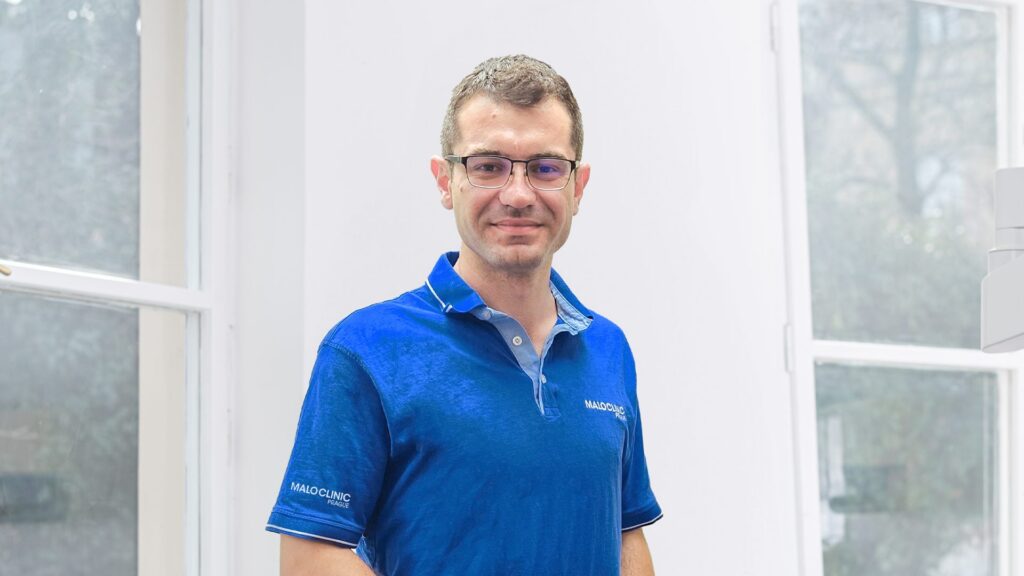
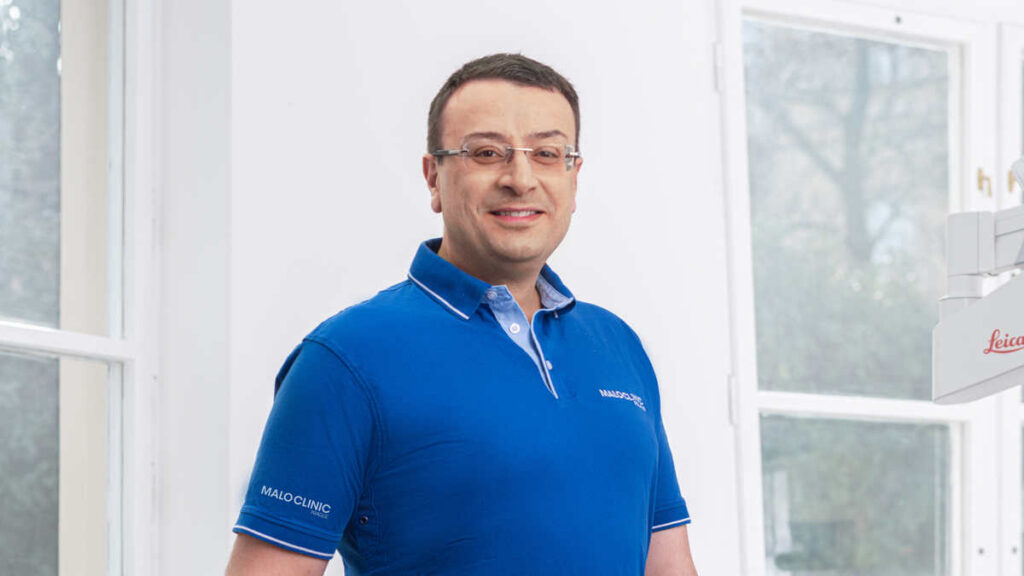
Who works in this field
Agreements and partnerships
Contracted health insurance companies and programme partners.
Contracted health insurance companies
- Všeobecná zdravotní pojišťovna (General Health Insurance Company) — VZP (111)
- Vojenská zdravotní pojišťovna (Military Health Insurance Company) — VoZP (201)
- Česká průmyslová zdravotní pojišťovna (Czech Industrial Health Insurance Company) — ČPZP (205)
- Oborová zdravotní pojišťovna (Industry Health Insurance Company) — OZP (207)
- Zaměstnanecká pojišťovna Škoda (Škoda Employee Insurance Company) — ZPŠ (209)
- Zdravotní pojišťovna ministerstva vnitra (Health Insurance Company of the Ministry of the Interior) — ZP MV ČR (211)
Programme partners
Sodexo
Sodexo provides services based on a combination of different capabilities and skills. It can currently be used only for dental hygiene and fillings.
Benefit Plus
External administration of employee benefits. It can currently be used only for dental hygiene and fillings.
Frequently asked questions
When does it make sense to see a surgeon?
With persistent tooth or jaw pain, recurrent inflammation, problems with wisdom teeth or a suspicious finding in the mouth. You do not need a referral from another doctor.
Does a wisdom tooth always have to be taken out?
No. If it is in the correct position, has fully erupted and can be cleaned, there is no reason to remove it. The decision depends on the X-ray and the condition of the surrounding tissue, not on the mere presence of the tooth.
Does oral surgery hurt?
The procedure is carried out under local anaesthetic, and sedation can be added for more complex cases. Some discomfort after the procedure is normal and is relieved with prescribed medication.
How long does healing take?
Swelling and discomfort usually subside within three to five days. Bone takes weeks to heal — which is why the follow-up appointment after the procedure is important.
Can I go to work after the procedure?
After a simple extraction, usually yes. After surgical removal of an impacted tooth, allow one to two days of rest, and several days after more extensive procedures.
What are the risks?
As with any surgical procedure: infection, bleeding and nerve irritation. They are rare, and good planning together with following the post-operative instructions keeps them to a minimum.
Is the procedure suitable for older patients?
Yes. If your general health allows it, age itself is not an obstacle.
What should I do if it hurts after the procedure?
Follow the instructions, take the prescribed medication and apply a cold compress. If the pain is severe or lasts several days, get in touch with us — do not wait for the follow-up appointment.
Book an appointment
Fill in the form and we will get back to you to find a suitable appointment together.