Tartar
Hardened plaque — a trigger of gum inflammation.
Some of the visualisations on this page were created with AI.
What is tartar?
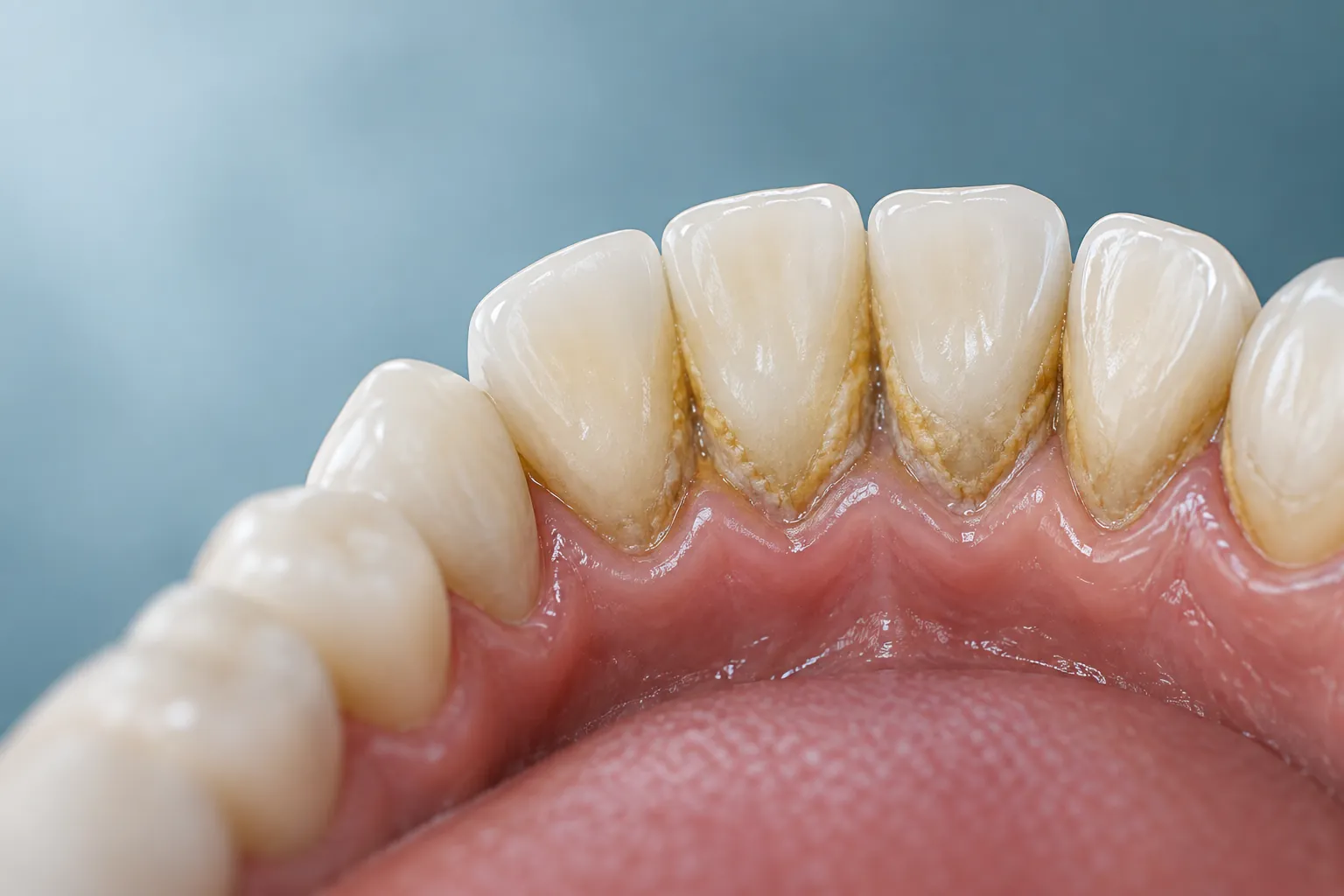
Tartar (dental calculus) is hardened dental plaque that forms on the teeth, below the gum line and on hard surfaces in the mouth — including restorations and implants. It develops from bacteria, food debris and saliva that have not been removed with a toothbrush and dental floss.
Besides the visible yellowish discolouration, tartar is behind tooth decay, gingivitis, periodontitis and bad breath. It can only be removed by a dental hygiene professional.
Main causes
Tartar usually builds up due to a combination of factors:
- inadequate oral hygiene
- frequent consumption of sugary foods and drinks
- build-up of dental plaque
- reduced saliva production
- irregular dental check-ups
Possible symptoms
Signs vary with the amount of tartar and the overall condition of the mouth. The most common include:
Visible deposits on the teeth
Tartar is visible as hard, yellowish deposits on the teeth, mostly along the gum line.
Inflamed and bleeding gums
Tartar causes gingivitis and, in more serious cases, periodontitis. The gums are red, swollen and bleed easily when brushing.
Bad breath
The surface of tartar is rough and collects more bacteria. The result is persistent bad breath that does not go away even with daily care.
Gum recession
Tartar contributes to gum disease and gum recession. The teeth then look longer because the roots are exposed — and the risk of decay and sensitivity increases.
Sensitive teeth
Exposed roots react to heat, cold, sweet things and brushing.
Pain or loose teeth
In advanced periodontitis the teeth lose their bone support, start to become loose and may even fall out.
Tartar is hardened plaque that causes tooth decay, gingivitis and bad breath. If you recognise these problems, book a professional cleaning.
Available treatment
Removing tartar is the foundation of a healthy mouth and of preventing complications. Treatment combines a professional procedure with proper care at home:
Dental hygiene
During a visit to the dental hygienist or dentist, tartar is removed with a professional instrument — a procedure called scaling. We use Airflow technology and the GBT protocol, which remove plaque, tartar and staining painlessly and also let us show you the areas that need more attention at home.
Toothbrush and interdental aids
Where a toothbrush cannot reach — especially between the teeth and around implants — interdental brushes or special floss help.
Antibacterial mouthwashes
They help keep plaque under control and reduce gum inflammation and sensitivity. They belong in your oral hygiene routine as an addition to brushing, not a replacement for it.
Curettage and root planing
In gingivitis or periodontitis, tartar and plaque must be removed from below the gum line and the root surfaces smoothed so that the gum can reattach.
Home care
Brush your teeth at least twice a day for two minutes with a fluoride toothpaste and floss every day. The brush should reach the gum line and every surface of the teeth.
Regular check-ups
Visiting the dental hygienist or dentist is key to catching problems early. Once every six months is usually enough, or more often depending on your individual needs.
Where we can help
We provide examination and treatment in these areas of care: