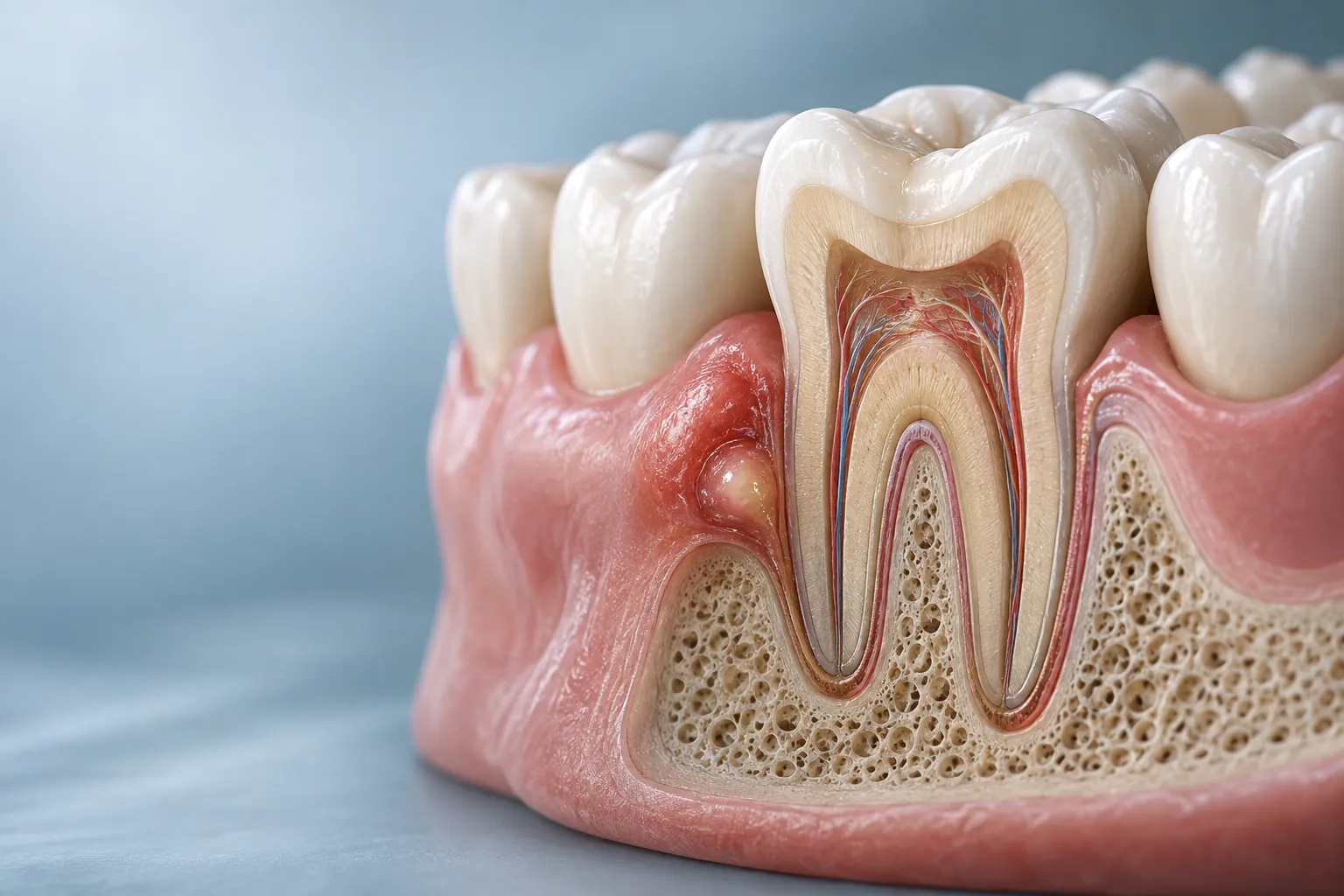
Dental abscess
A localised infection with severe pain and swelling.
Some of the visualisations on this page were created with AI.
What is a dental abscess?
A dental abscess is a bacterial infection in which pus forms near a tooth or in the gum. It can be periapical — at the root of the tooth — or periodontal, that is, in the gum.
It most often develops from untreated decay, from periodontal disease, or after a fracture or injury to the tooth. It causes pain and swelling, and the infection can spread further, so you should see a dentist as soon as possible.
Main causes
An abscess usually develops due to a combination of factors:
- untreated tooth decay
- periodontal disease
- dental injury
- tooth fracture
- build-up of dental plaque
Possible symptoms
Signs vary with the extent and location of the infection. The most common include:
Severe throbbing pain
The pain is often described as throbbing and may radiate to the jaw, ear or neck. It gets worse when chewing and lying down.
Sensitivity to heat and cold
The tooth is extremely sensitive to hot and cold food and drinks.
Swollen gum
The gum around the affected tooth is swollen, red and tender to the touch.
Unpleasant taste in the mouth
A bitter or salty taste caused by draining pus.
Bad breath
The infection causes persistent bad breath that normal oral hygiene does not get rid of.
Fever
In more serious cases the infection is accompanied by fever and general malaise.
Facial swelling
The face may be visibly swollen on the side of the affected tooth; the swelling sometimes spreads to the neck.
Swollen lymph nodes
The lymph nodes in the neck or under the jaw become enlarged and tender to the touch.
Difficulty opening the mouth and swallowing
Swelling and pain make it difficult to open the mouth and to swallow.
A dental abscess is a serious condition that needs immediate treatment. Do not delay seeing a dentist — without treatment, the infection spreads further.
Available treatment
The aim of treatment is to control the infection, relieve the pain and prevent complications. Depending on the situation, the options are:
Draining the abscess
The dentist makes a small incision to let the pus drain. This relieves the pain and helps bring the infection under control.
Antibiotics
If the infection spreads beyond its original site or there are signs of a severe course, the dentist will prescribe antibiotics.
Root canal treatment
A periapical abscess usually requires root canal treatment: removing the infected tissue, then cleaning, disinfecting and filling the canal.
Tooth extraction
If the tooth is so damaged that it cannot be saved, it is extracted — removing the source of the infection.
Where we can help
We provide examination and treatment in these areas of care: