Mouth ulcers
Small painful sores on the lining of the mouth.
Some of the visualisations on this page were created with AI.
What are mouth ulcers?
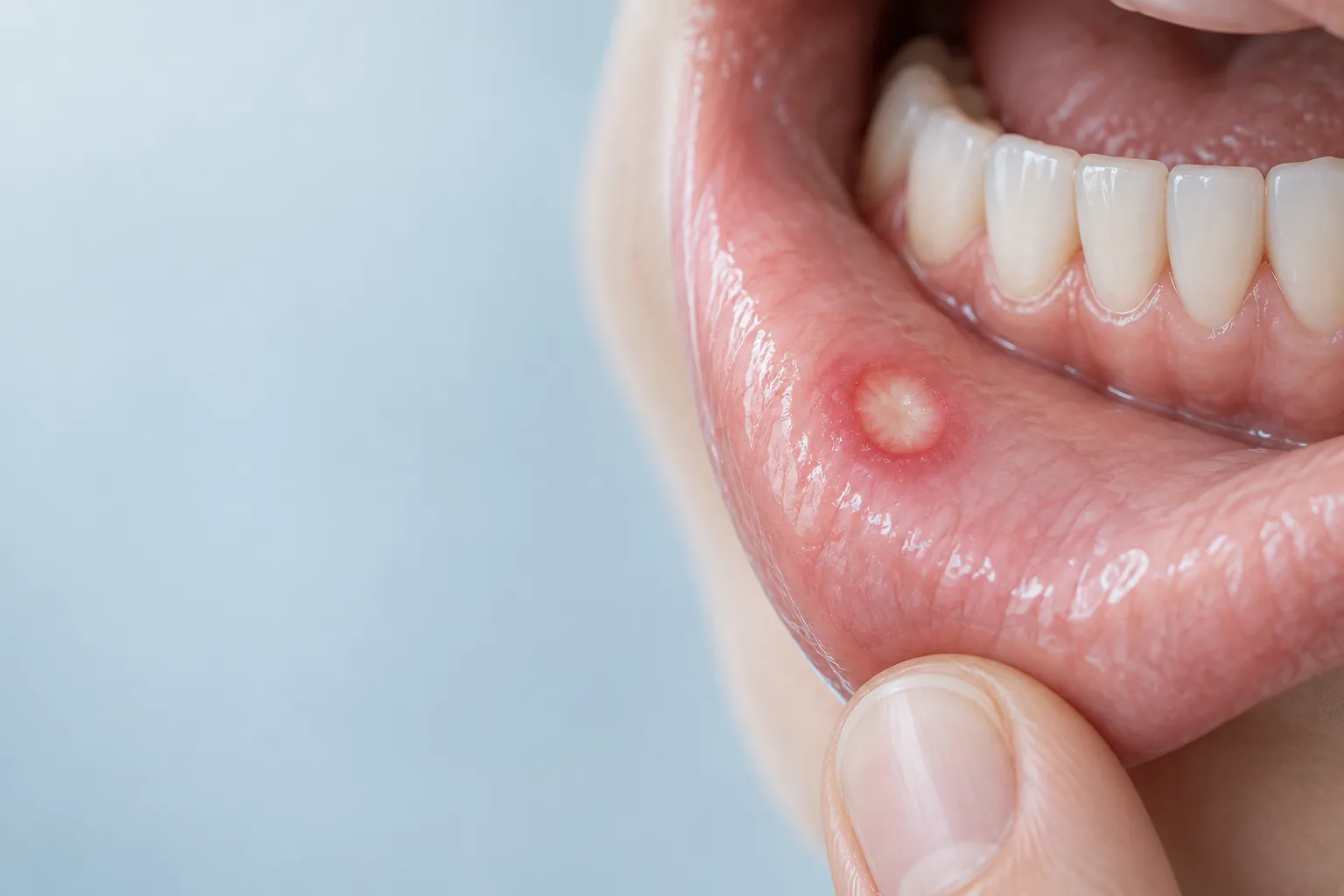
Mouth ulcers (aphthous ulcers) are small, painful sores on the lining of the mouth — on the cheeks, lips, tongue and the non-keratinised gum. They have a whitish to yellowish surface with a red border.
They are benign and not contagious, but they get in the way of eating and speaking. There are three types: minor ulcers, the most common, which are small and heal quickly; major ulcers, deeper and larger, which may leave a scar; and herpetiform ulcers, which are multiple and very painful — despite the similar name, they are not related to cold sores (herpes).
Main causes
The causes of mouth ulcers are not fully understood, but these factors come up repeatedly:
- stress
- diet and nutritional deficiencies
- hormonal changes
- changes in immunity
- genetic predisposition
Possible symptoms
The most common signs of mouth ulcers include:
Pain and discomfort
Pain is the most noticeable symptom and gets worse after acidic, spicy or very hot food. How much it hurts depends on the size and location of the ulcer.
Small round sores
Usually smaller than one centimetre, single or in groups. Herpetiform ulcers can merge together.
Redness around the sore
The edges are usually red — a sign of inflammation in the surrounding area. This is most visible with larger sores.
Difficulty eating and speaking
The discomfort makes chewing and speaking harder, especially when the ulcer is in a place that moves, such as the tongue or lip.
Local swelling
Mild swelling sometimes appears around the ulcer, making the discomfort worse.
If mouth ulcers persist, get worse or appear frequently, professional follow-up is advisable — it helps find the cause and prevent them from coming back.
Available treatment
Mouth ulcers usually clear up on their own within 7 to 14 days. Treatment eases the symptoms and speeds up healing:
Gentle oral hygiene
A soft toothbrush and a toothpaste without sodium lauryl sulphate reduce irritation and the risk of new sores. Gentle mouth rinses also help.
Ointment or gel for the mouth
Products with a local anaesthetic, such as lidocaine, or with an anti-inflammatory ingredient relieve pain and reduce inflammation; in more severe cases, topical corticosteroids are also used. Pharmacies sell gels that form a protective layer when applied and speed up healing.
Adjusting your diet
While the ulcers heal, it is worth avoiding acidic, spicy and very hot food and choosing soft food instead. Drinking enough is also important.
Systemic treatment
For severe or frequently recurring ulcers, and always on prescription, corticosteroids or immunomodulators may be considered. If a deficiency is confirmed, iron, vitamin B12 or folic acid supplements are given.
Where we can help
We provide examination and treatment in these areas of care: