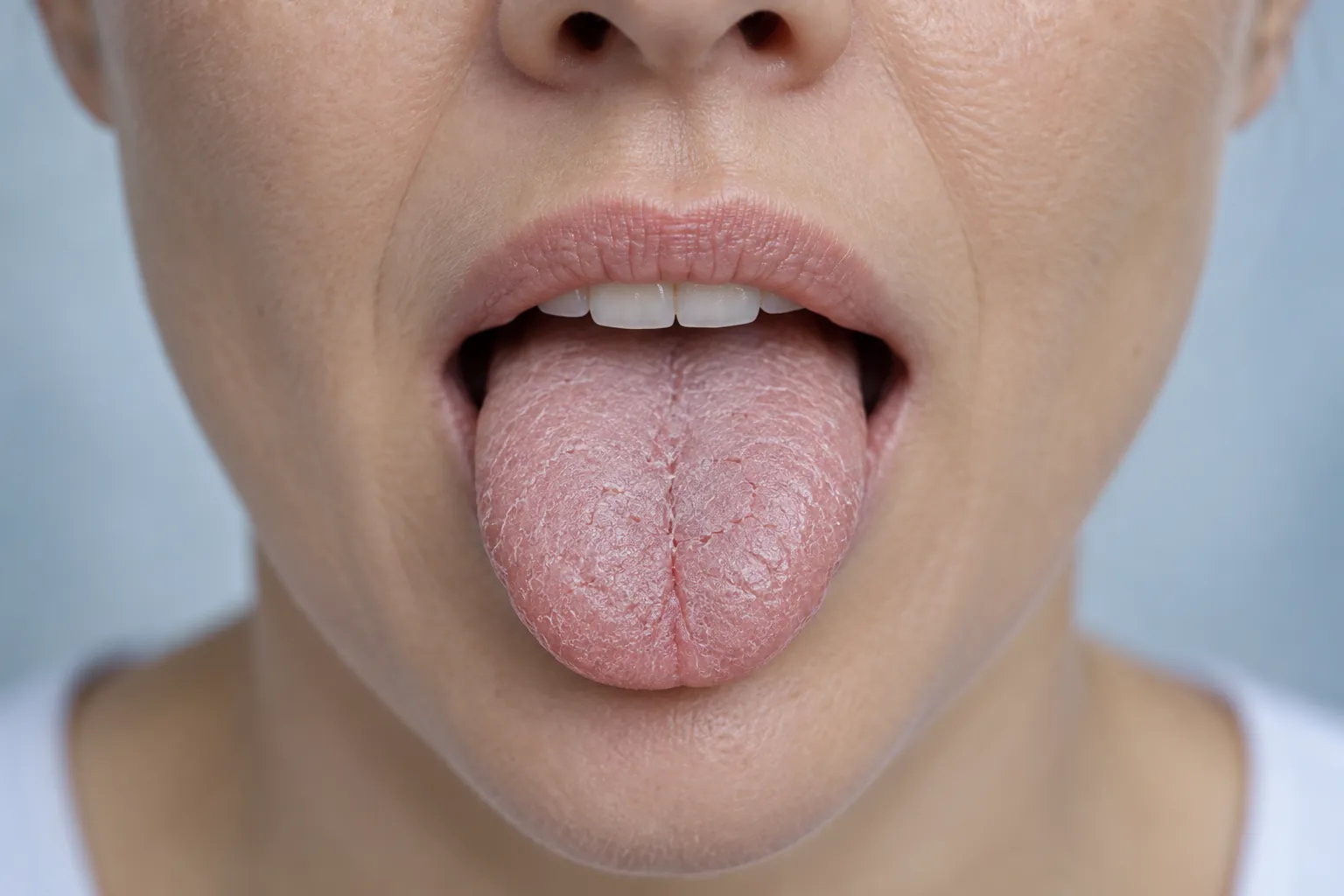
Xerostomia — dry mouth
A dry mouth caused by reduced saliva production.
Some of the visualisations on this page were created with AI.
What is xerostomia?
Xerostomia is a feeling of dryness in the mouth, usually associated with reduced saliva production. It causes discomfort, affects quality of life and is often a sign of other health problems — so it should not be ignored.
Saliva is essential for oral health: it aids digestion and speech and protects the mouth from bacteria. Drinking enough, healthy habits, suitable products and professional guidance are the main ways to ease the symptoms and prevent complications.
Main causes
Xerostomia usually develops due to a combination of factors:
- use of certain medicines
- radiotherapy to the head and neck
- autoimmune diseases
- dehydration
- mouth breathing
Possible symptoms
The most common signs of xerostomia include:
A dry feeling in the mouth and throat
The main symptom: persistent dryness that makes speaking, swallowing and wearing a denture difficult.
Thick or sticky saliva
The saliva becomes thicker, which is unpleasant and makes chewing, speaking and swallowing harder.
Cracks at the corners of the mouth and on the lips
Constant drying leads to chapped lips and painful cracks at the corners of the mouth, which are prone to infection.
Dry and irritated gums
The gums dry out, become irritated and are more prone to disease.
Bad breath
Saliva cleans the mouth and washes away bacteria. Without it, persistent bad breath develops.
Rough and cracked tongue
A lack of saliva makes the tongue feel rough, dry and cracked and makes the lining of the mouth more sensitive.
Altered or reduced taste
Xerostomia changes the sense of taste — food tastes different or unpleasant.
If your symptoms persist or get worse, have your dentist assess them. Even without significant pain, regular monitoring is the surest way to prevent complications.
Available treatment
The approach depends on the cause and severity. The most common measures include:
Drinking enough
Drinking water regularly throughout the day keeps the mouth moist and eases the symptoms. Hydration is the foundation of both general and oral health.
Stimulating saliva production
Sucking sugar-free sweets or chewing sugar-free gum encourages the salivary glands to produce more saliva.
Saliva substitutes
Gels, sprays and mouthwashes designed to moisten the mouth bring temporary relief — they lubricate the mouth and ease the feeling of dryness.
Oral hygiene
Suitable products usually contain lactoperoxidase, lysozyme and lactoferrin. Regular brushing and flossing remain the foundation, together with a check-up with your dentist or dental hygienist at least once every six months.
Avoiding drying substances
Alcohol, caffeine, tobacco and very salty or spicy food make the dryness worse. A diet rich in fruit and vegetables with a high water content helps.
Humidifier
A humidifier in the bedroom reduces drying of the mouth and throat at night. It helps especially in dry environments and in winter.
Medication
To stimulate saliva production, a doctor may prescribe medication such as pilocarpine.
Where we can help
We provide examination and treatment in these areas of care: