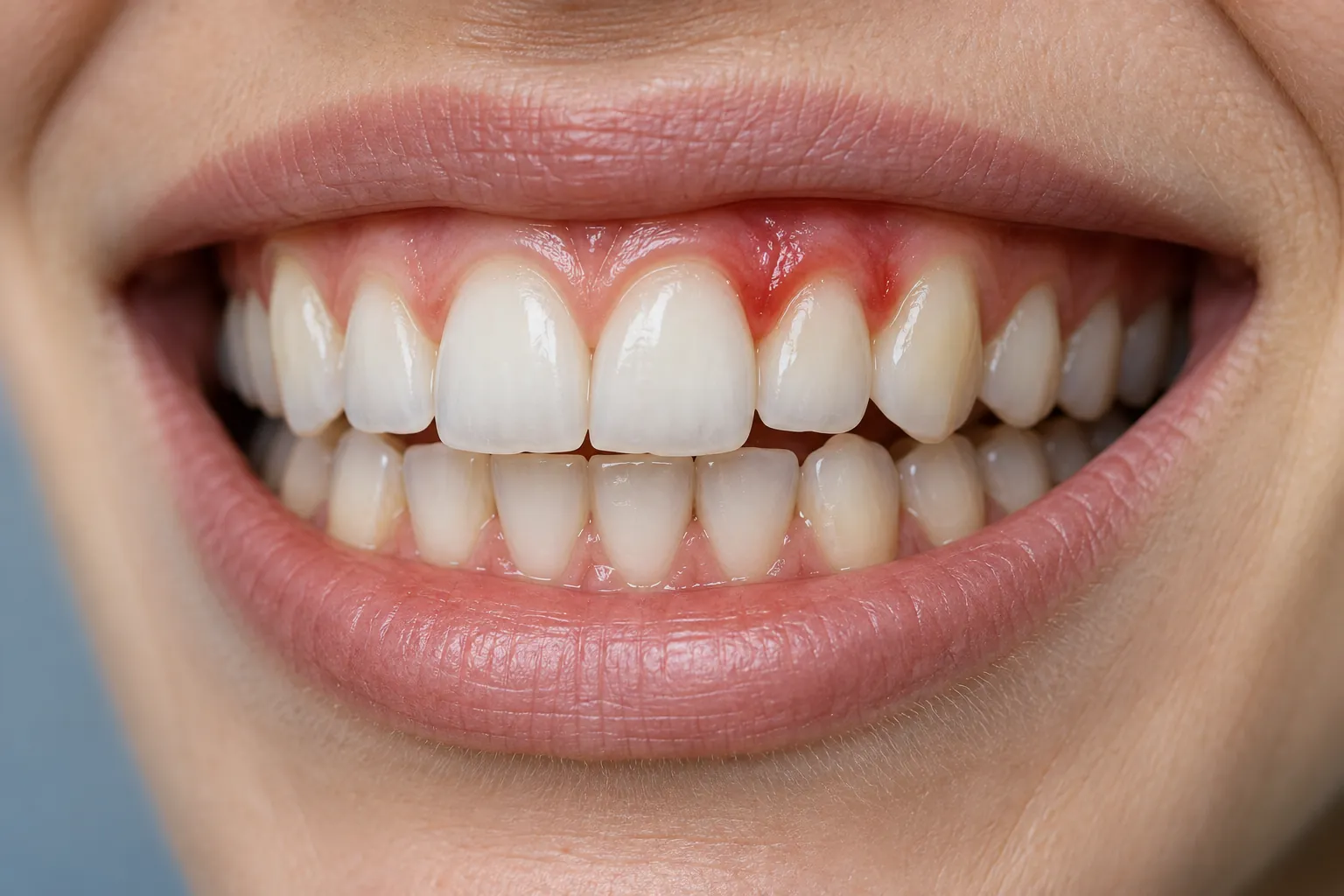
Gingivitis
Red, swollen and bleeding gums. Reversible if treated early.
Some of the visualisations on this page were created with AI.
What is gingivitis?
Gingivitis is inflammation of the gum tissue around the teeth. It is the most common and mildest form of periodontal disease and is usually caused by a build-up of dental plaque and tartar on the teeth and gums.
It is reversible — with proper treatment it clears up. Without treatment, however, it progresses to periodontitis, a more serious condition.
Main causes
Gingivitis usually develops due to a combination of factors:
- inadequate oral hygiene
- tartar
- build-up of dental plaque
- smoking
- hormonal changes
Possible symptoms
The most common signs of gingivitis include:
Red and swollen gums
One of the first signs. Healthy gums are pink; when inflamed, they turn red and swell slightly as inflammatory fluid builds up in them.
Bleeding when brushing
Inflammation weakens the tissue, so it bleeds even with gentle stimulation — when brushing or flossing.
Persistent bad breath
Built-up plaque, food debris and inflammation lead to persistent bad breath.
Mild gum recession
Inflammation can cause the gum to recede, exposing part of the root and making the tooth more sensitive.
Tender gums
The affected area hurts or feels uncomfortable when pressed and when brushing.
If your symptoms persist or get worse, have your dentist assess them. Even without significant pain, regular check-ups are the surest way to prevent complications.
Available treatment
The approach depends on the extent of the inflammation. The most common measures include:
Better oral hygiene
The foundation that can reverse the condition: brush your teeth at least twice a day with a soft toothbrush and fluoride toothpaste, and floss every day to remove plaque and food debris from between the teeth.
Professional cleaning
Removal of tartar by a dentist or dental hygienist, including below the gum line. This calms the inflammation and allows the tissue to heal.
Changing habits and treating other problems
Whatever is feeding the inflammation also needs to be dealt with — untreated decay, damaged fillings or poorly fitting dentures. Otherwise the inflammation comes back.
Where we can help
We provide examination and treatment in these areas of care: