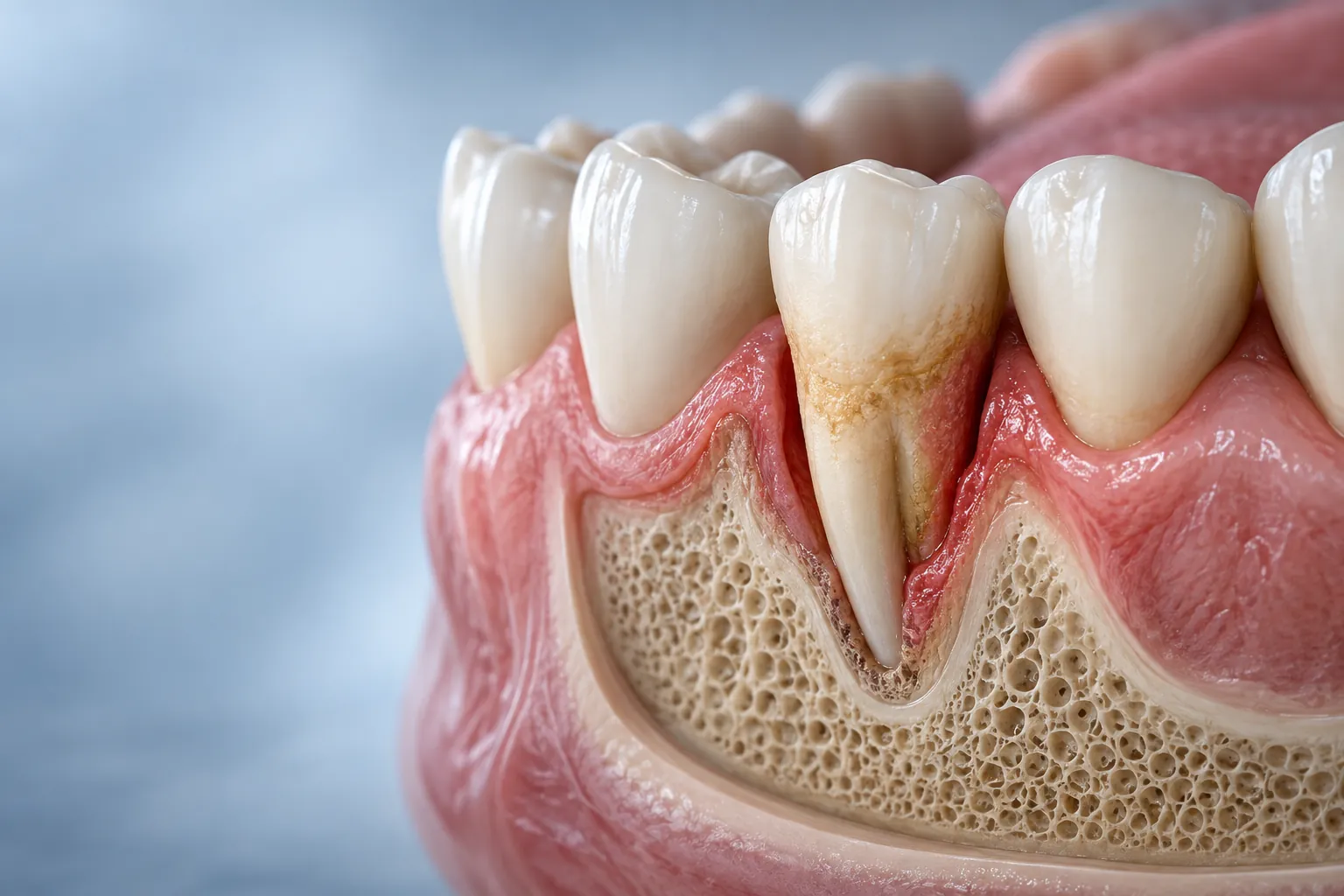
Periodontitis
Inflammation that robs the teeth of their bone support.
Some of the visualisations on this page were created with AI.
What is periodontitis?
Periodontitis is a chronic inflammatory disease that affects the tissues supporting the tooth — the gum, the alveolar bone and the periodontal ligament.
It usually develops from untreated gingivitis, when plaque and tartar build up between the teeth and gums. If the resulting inflammation is not brought under control, it gradually destroys the tissues that hold the tooth in place.
Main causes
Periodontitis usually develops due to a combination of factors:
- inadequate oral hygiene
- smoking
- diabetes
- autoimmune diseases
- hormonal changes
Possible symptoms
The most common signs include:
Red, swollen or bleeding gums
One of the first signs. Inflammation shows as redness, swelling and bleeding when brushing or flossing.
Gum recession
As the disease progresses, the gum recedes and gradually exposes the roots of the teeth. Besides the effect on appearance, sensitivity and the risk of further problems increase.
Increased tooth sensitivity
Exposed roots react to hot, cold and sweet things.
Bad breath
Chronic bad breath comes from built-up bacteria and the breakdown of inflamed tissue.
Periodontal pockets
Spaces form between the tooth and the gum as the supporting tissue is lost. Food debris and bacteria collect in them, which keeps the inflammation going.
Pain when chewing
Inflammation and loss of support cause discomfort or pain when eating.
Loose teeth
At an advanced stage, weakened bone and gum support causes the teeth to loosen, shift and eventually be lost.
If your symptoms persist or get worse, have your dentist assess them. Even without significant pain, regular monitoring is the surest way to prevent complications.
Available treatment
Treatment depends on the severity of the disease. The aim is to control the infection, preserve the supporting tissues of the teeth and prevent further complications:
Curettage and root planing
Deep cleaning below the gum line removes built-up plaque and tartar. The root surfaces are then smoothed so that bacteria find it harder to stick to them.
Periodontal surgery
Surgery removes deeply inflamed and infected tissue. Grafts or guided bone regeneration are used to rebuild the supporting tissues.
Regular maintenance
Check-ups at regular intervals monitor the condition and catch any return of the disease early. They also include setting up a home care routine tailored to the patient.
Where we can help
We provide examination and treatment in these areas of care: