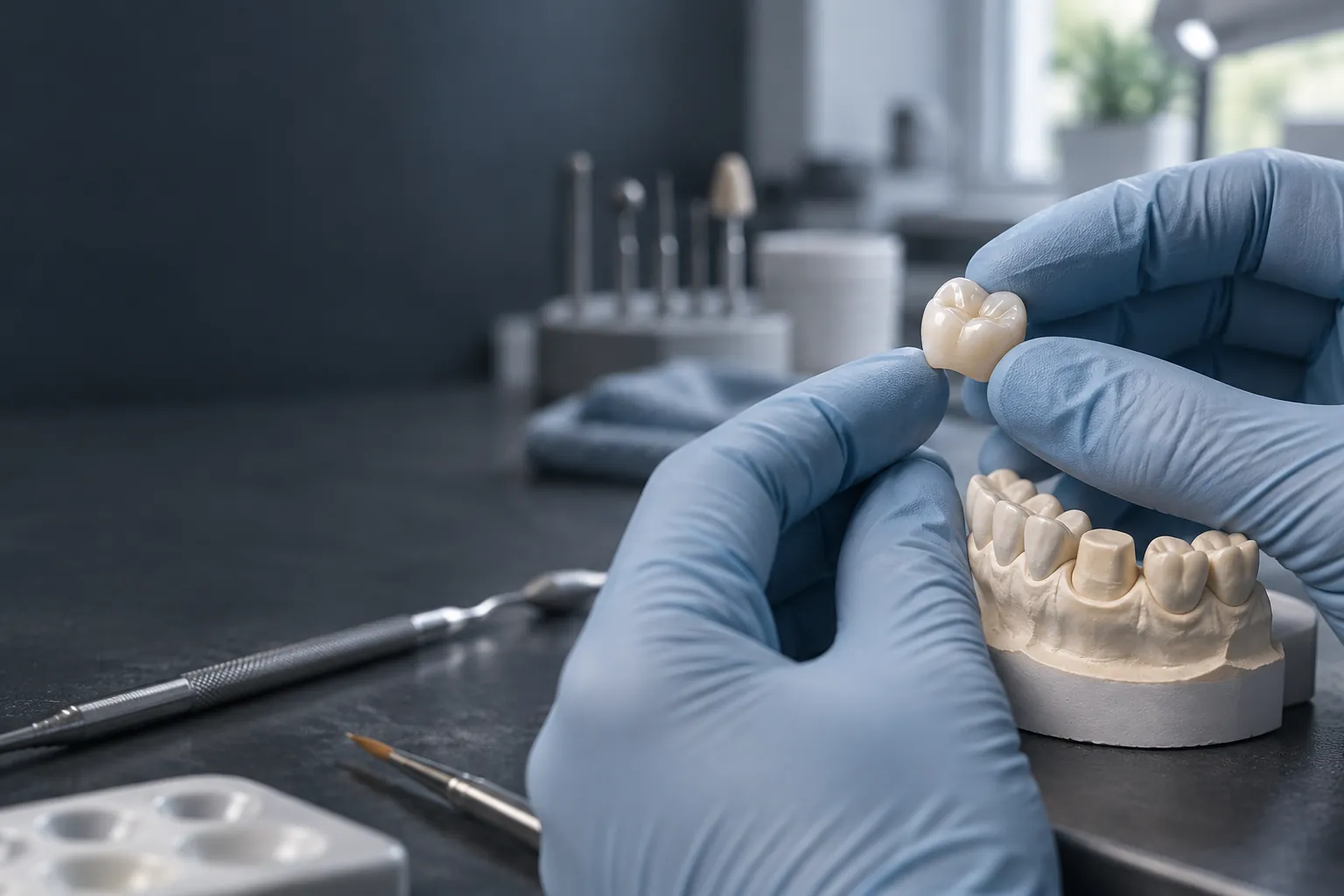
Prosthodontics and restorations
Crowns, bridges and full-mouth reconstructions.
Some of the visualisations on this page were created with AI.
About the field
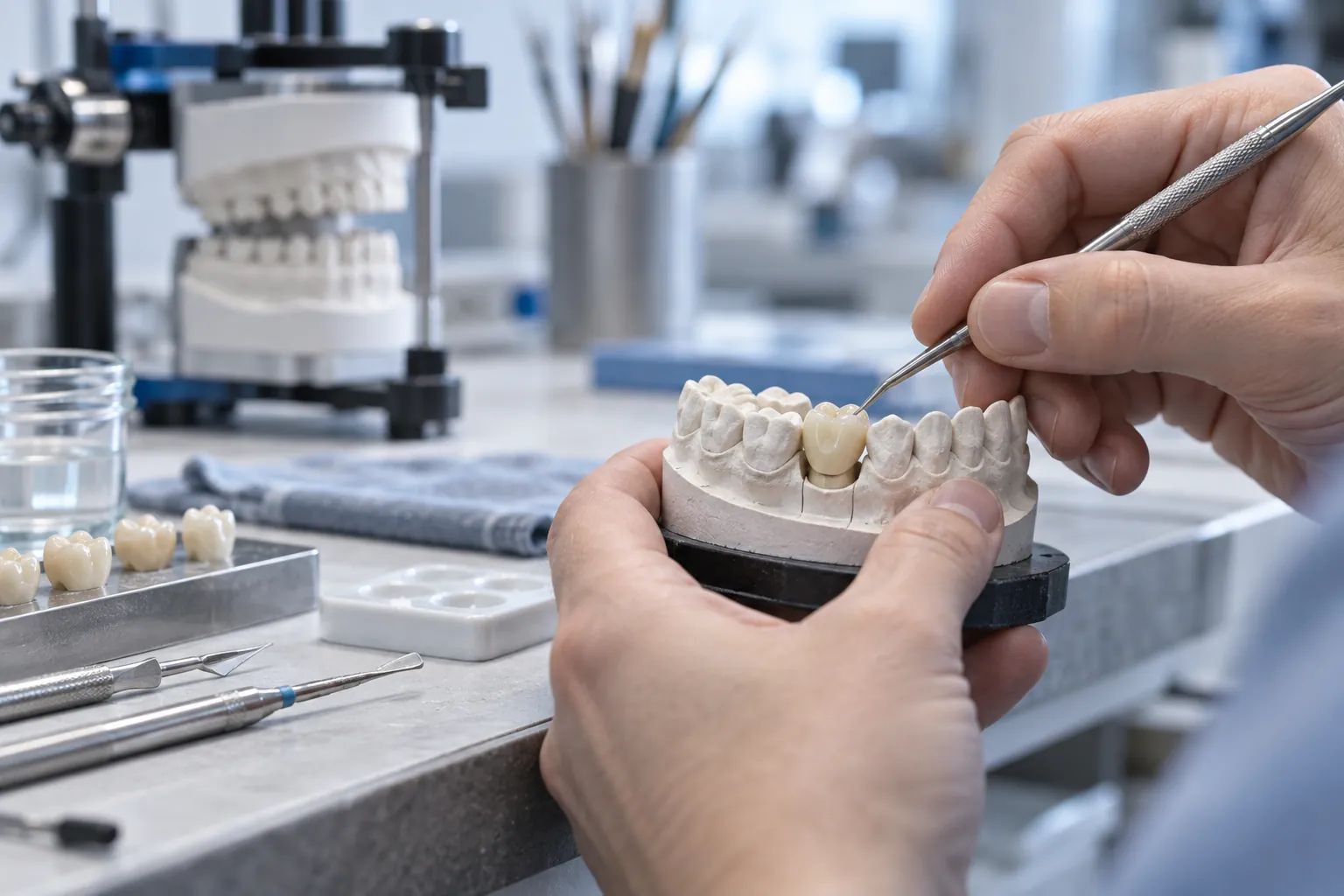
Prosthodontics takes over where a tooth can no longer simply be filled. It replaces missing tooth tissue with a crown, and missing teeth with a bridge or an implant-supported restoration — fixed or removable.
The aim is not just to fill a gap. A reconstruction restores a correct bite, distributes chewing forces and protects the remaining teeth from overload and wear.
The field works closely with others: oral surgery, implantology, endodontics and periodontology. Only together do they produce a result that lasts.
We choose the material according to the position in the mouth and the aesthetic requirements — from all-ceramic crowns at the front to more durable solutions at the back.
The solutions we choose from
Every case is different. The solution depends on how much tooth tissue remains and what the patient needs.
Crowns
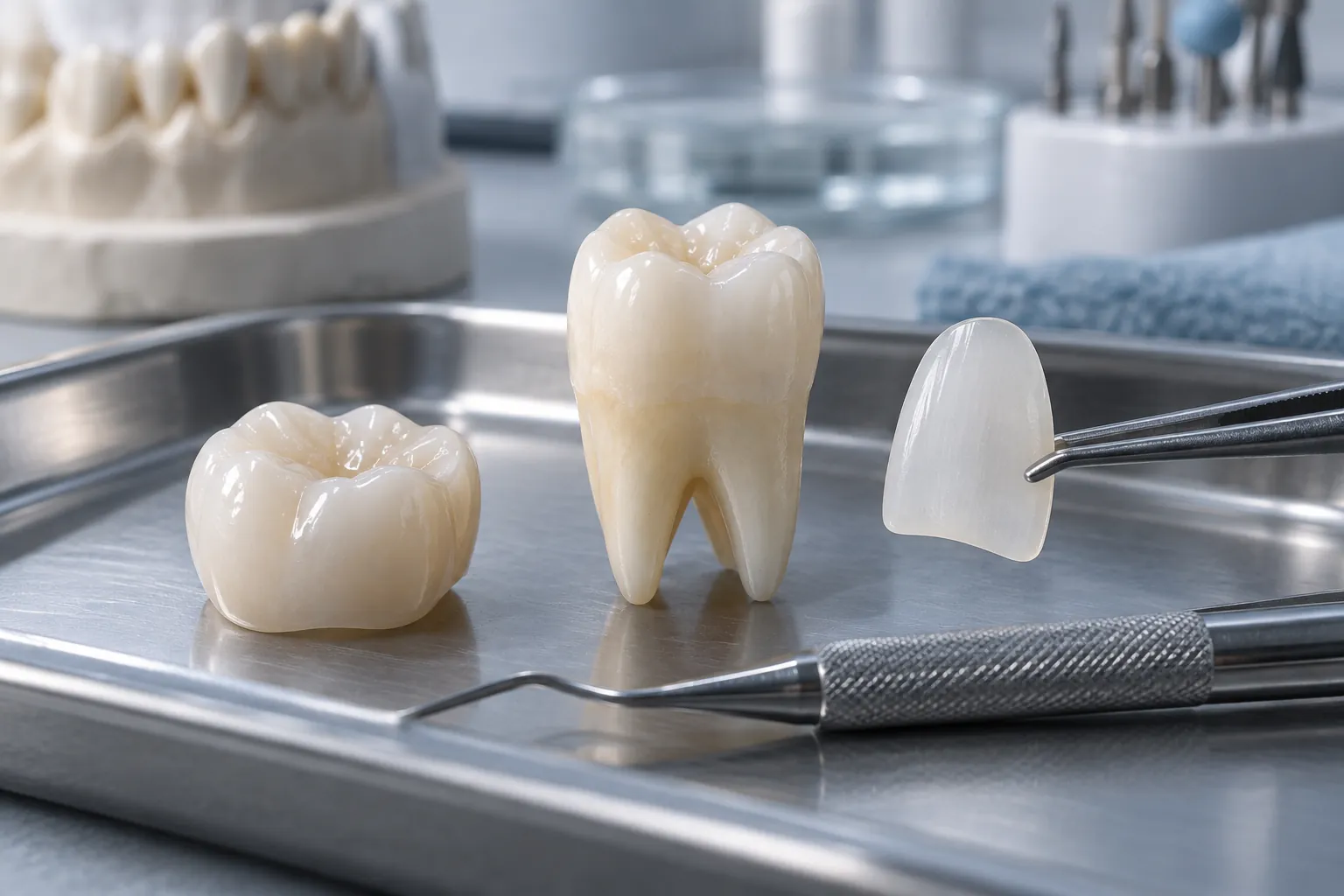
A crown covers the whole damaged or weakened tooth and restores its shape, function and strength. We use it where a tooth has been affected by extensive decay, injury or wear.
Bridges
A fixed replacement for one or more missing teeth. It is supported by the neighbouring natural teeth or by implants and gives you back confidence when chewing and speaking.
Veneers
Thin ceramic shells on the front surface of the tooth. They correct shape, colour and alignment, while only a little tooth tissue needs to be removed — sometimes none at all.
Fixed full-jaw restoration
A whole upper or lower jaw can be restored with a fixed implant-supported restoration. We offer the individually planned Straumann® Pro Arch solution.
Removable dentures
Where a fixed solution is not possible or suitable. A removable denture can also be supported by implants — it then holds much better than a denture resting only on the gums.
What a restoration gives you
Full chewing ability
A restoration replaces missing or damaged teeth, so you can chew normal food again. You will notice the difference in your digestion and in what you are able to eat.
Clear pronunciation
Missing teeth change how some sounds are pronounced. A restoration makes your speech clear again — and with it your confidence in conversation.
Relief from discomfort
A damaged or missing tooth makes the surrounding teeth do its work. A restoration distributes the pressure, and the discomfort when chewing eases.
Preserving facial shape
After teeth are lost, bone shrinks and the support for the lips and cheeks changes. A well-designed restoration maintains this support so the face does not look sunken.
Natural appearance
We choose the shape and colour to match the neighbouring teeth. The aim is a restoration that nobody notices — not even you in the mirror.
Preventing further problems
The gap left by a tooth does not close: the neighbouring teeth tilt into it, the opposing tooth over-erupts and the jaw joint suffers. Timely replacement prevents this.
The technology we rely on
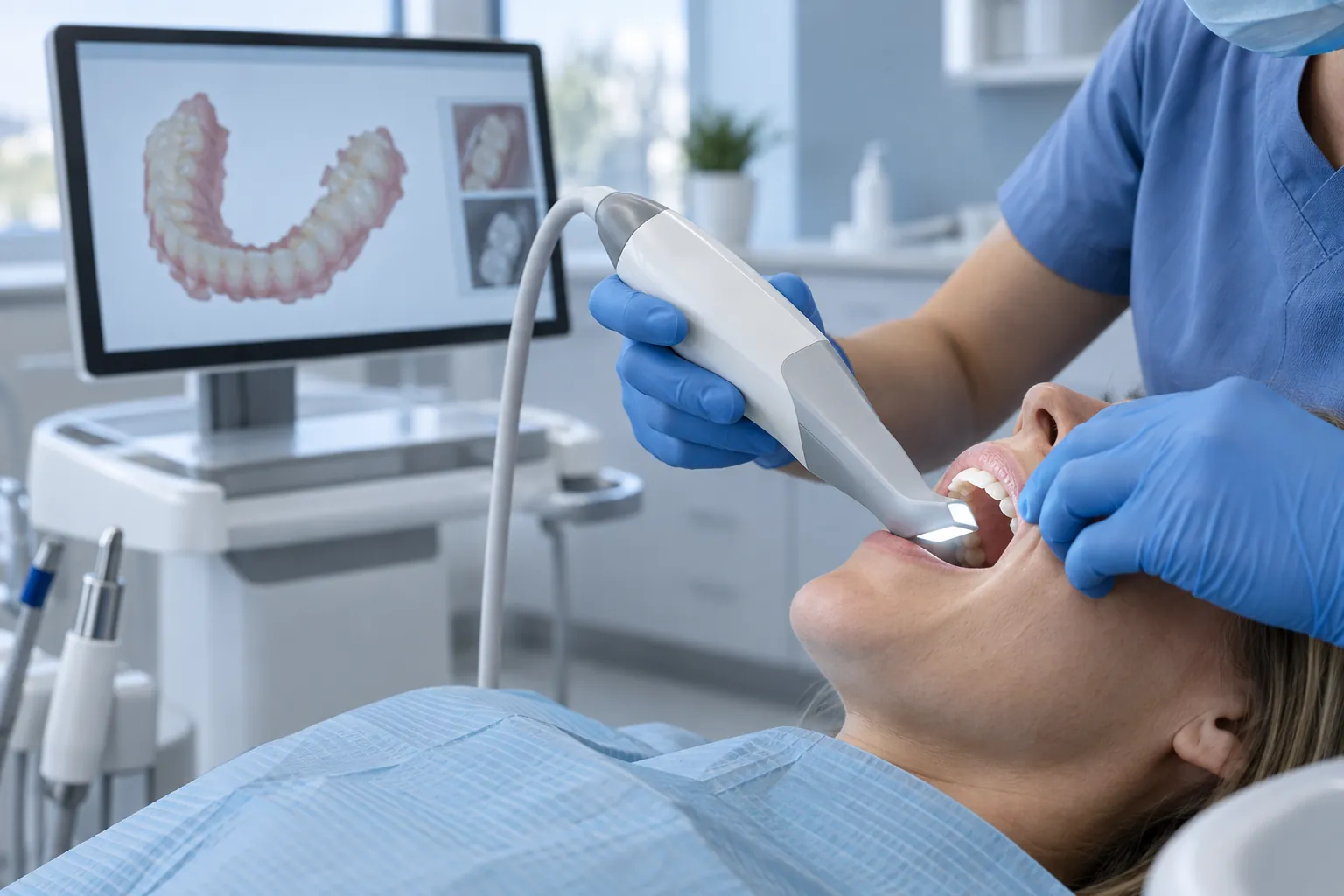
Our prosthodontics is supported by digital technology: an intraoral scanner, digital planning and CAD software. Data collection is more accurate and communication with the laboratory is simpler.
Intraoral scanner
An impression without impression material. More comfortable for the patient and a more accurate basis for the laboratory.
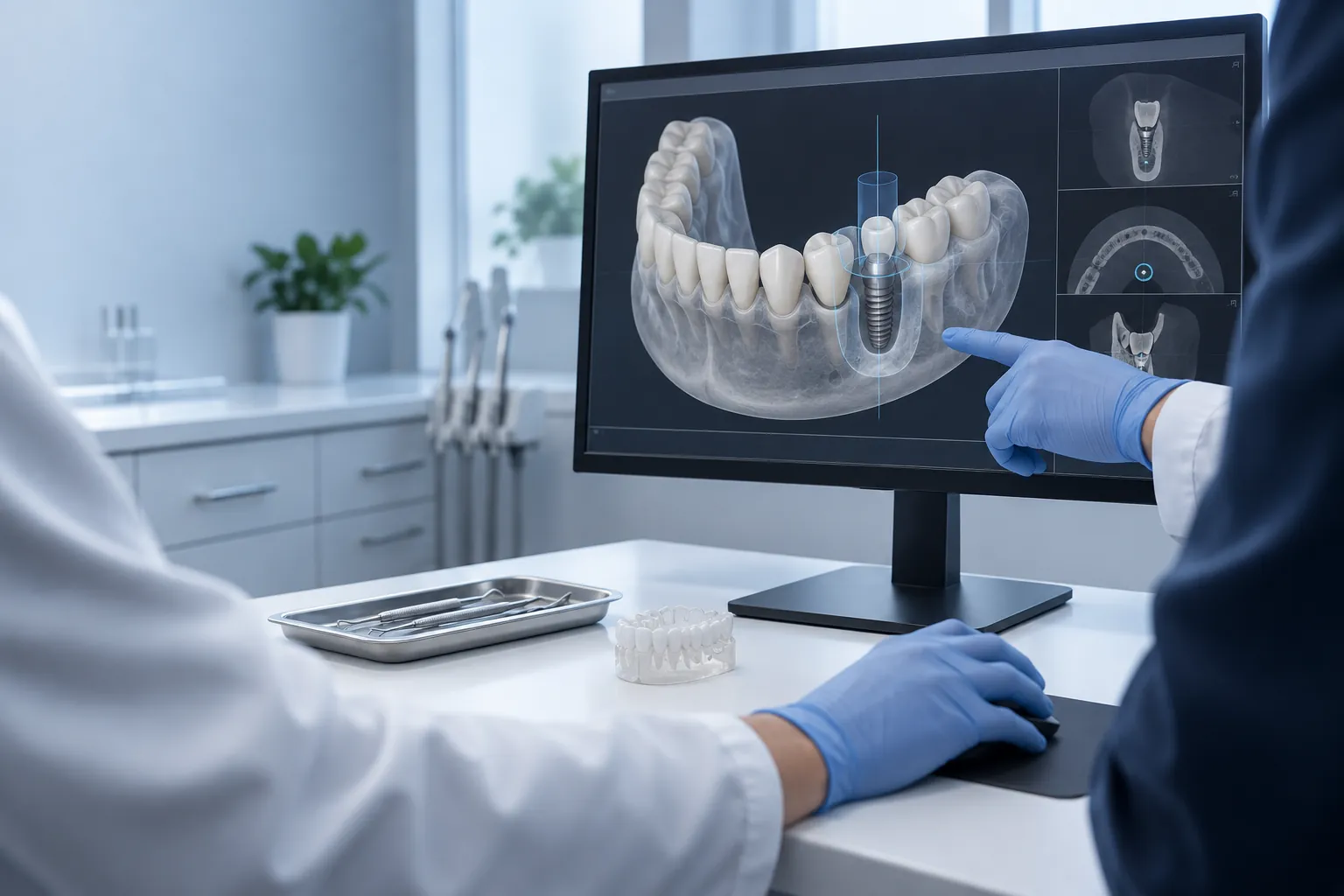
Digital planning
We can see the shape and position of the future restoration before it is made. This makes it possible to try out both function and appearance.
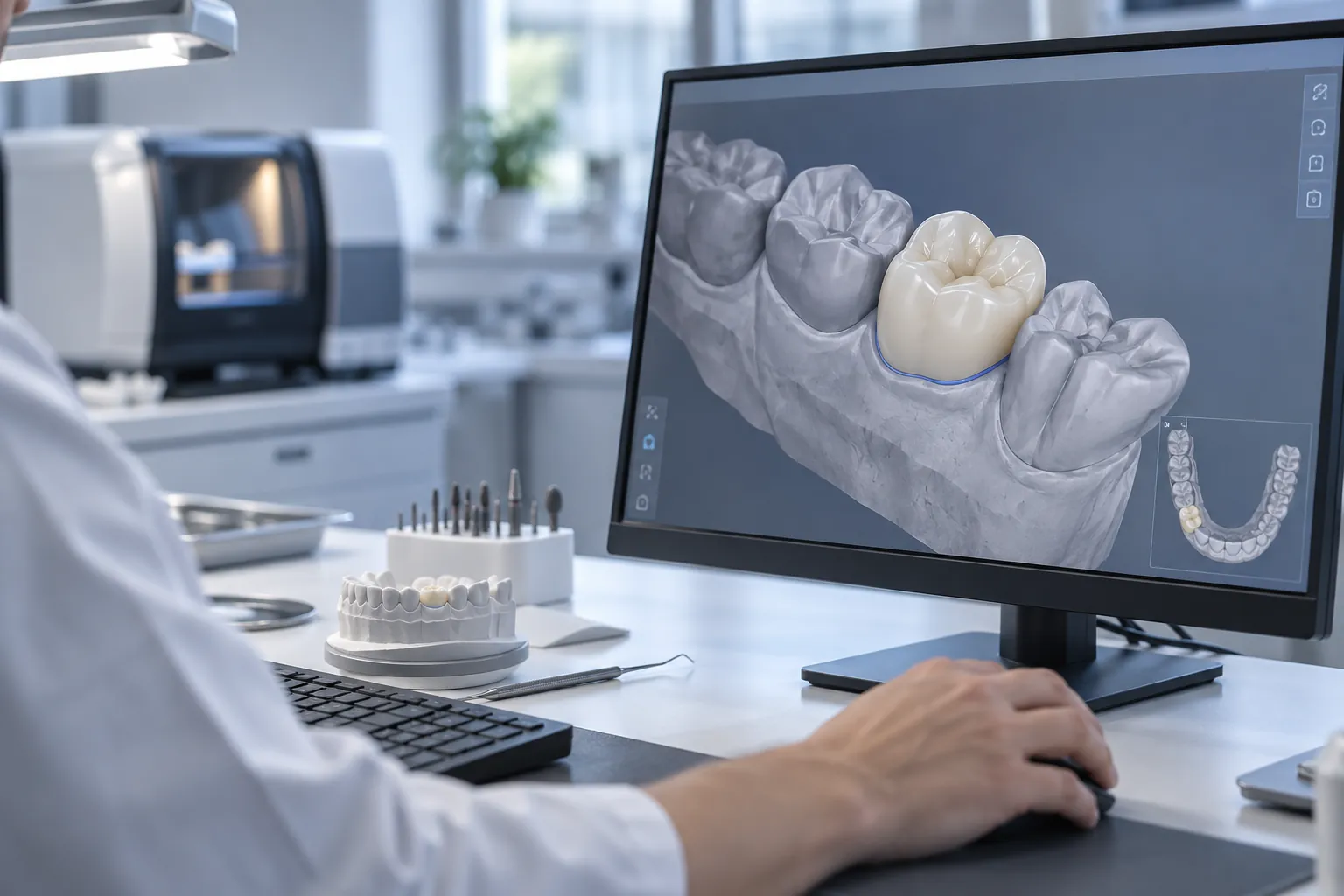
CAD software
We design the restoration on a computer and make it by milling or printing. The precision is higher than with manual work on a plaster model.
A temporary restoration based on the digital plan lets you try out function, comfort and appearance before the final one is made.
How we work
Bite analysis
Before we begin, we assess the bite as a whole. A restoration that does not fit the bite overloads the neighbouring teeth and the joint.
Impression and try-in
The restoration is made in the laboratory from an impression or a digital scan. Before fitting it, we try it in and fine-tune the shape and colour.
Fitting and check
We fit the finished restoration and check the contacts in the bite. Adjusting it straight away is easier than after months of wear.
What we treat in this field
Damaged and broken teeth
Wear caused by bruxism or age changes the bite. Extensive fractures and deep destruction put the whole tooth at risk.
Partial or complete tooth loss
Replacing missing teeth with a fixed or removable restoration, supported by your own teeth or by implants. It restores stability and confidence in everyday life.
Aesthetic imperfections
Uneven teeth or a changed shape, size or colour disrupt the harmony of a smile. We correct them with veneers or crowns.
Treatments in this field
An overview of what we do in this field. Prices are listed in our price list.
Clinical cases
See cases of patients from our Prague centre, with before and after comparisons.
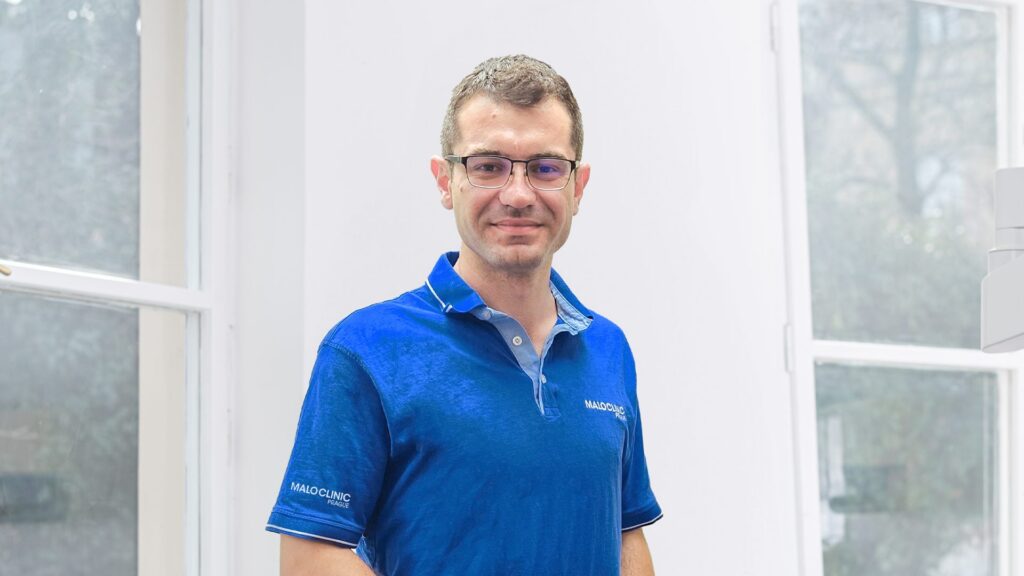
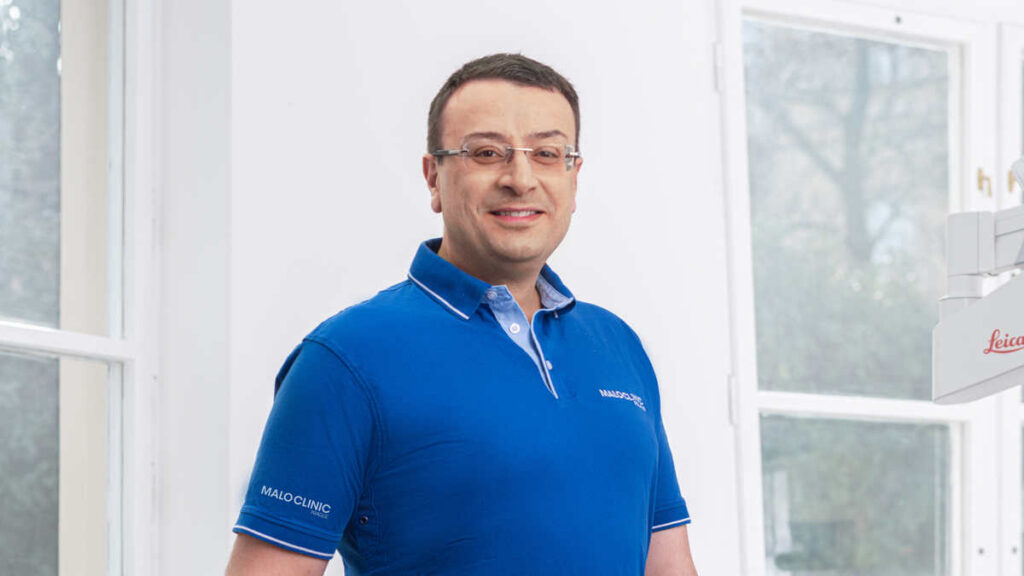
Who works in this field

Agreements and partnerships
Contracted health insurance companies and programme partners.
Contracted health insurance companies
- Všeobecná zdravotní pojišťovna (General Health Insurance Company) — VZP (111)
- Vojenská zdravotní pojišťovna (Military Health Insurance Company) — VoZP (201)
- Česká průmyslová zdravotní pojišťovna (Czech Industrial Health Insurance Company) — ČPZP (205)
- Oborová zdravotní pojišťovna (Industry Health Insurance Company) — OZP (207)
- Zaměstnanecká pojišťovna Škoda (Škoda Employee Insurance Company) — ZPŠ (209)
- Zdravotní pojišťovna ministerstva vnitra (Health Insurance Company of the Ministry of the Interior) — ZP MV ČR (211)
Programme partners
Sodexo
Sodexo provides services based on a combination of different capabilities and skills. It can currently be used only for dental hygiene and fillings.
Benefit Plus
External administration of employee benefits. It can currently be used only for dental hygiene and fillings.
Frequently asked questions
What is the difference between a crown and a bridge?
A crown covers a single damaged tooth. A bridge replaces a missing tooth and is supported by the neighbouring teeth or by implants.
When is a veneer more suitable and when a crown?
A veneer only changes the front surface of the tooth — it is suitable for colour, shape and minor misalignment. A crown covers the whole tooth and is used where the tooth is extensively damaged by decay, injury or wear.
Can you tell a crown at first glance?
With all-ceramic crowns, usually not. We match the colour and translucency to the neighbouring teeth.
How long does a restoration last?
From years to decades. Its lifespan is shortened by bruxism, neglected hygiene and inflammation in the surrounding tissues.
Will a restoration affect the appearance of my face?
Yes, and usually for the better. Missing teeth take away support from the lips and cheeks. A well-designed restoration restores this support and the face looks more natural.
Do the neighbouring teeth need to be ground down?
It depends on the solution. A bridge supported by your own teeth requires them to be ground down; a bridge on implants does not. With veneers, little tooth tissue is usually removed, sometimes none.
How do I look after a restoration?
Just like your own teeth, plus the interdental aids your dental hygienist recommends. Regular check-ups are even more important with restorations than with healthy teeth.
Book an appointment
Fill in the form and we will get back to you to find a suitable appointment together.